A Gaijin's Guide to Solo-Leveling with the Best Games for Learning Japanese
 By Brian Go, Market & User Researcher
Updated
Ever switched a game's language to Japanese, convinced that immersion will help you learn? Three hours later you're drowning in kanji and have no idea where the story went, wondering whether any of that counted as studying.

That is what it feels like when you walk into an S-rank game dungeon with E Rank stats. Ok, maybe you are C Rank, but you get the point. Let's find out how to learn Japanese with games that are actually built for learning Japanese.
1. You've started with the wrong video games to learn Japanese
Games like Pokémon or Persona 5 played in Japanese are what we call entertainment games. They're built to entertain, and so any Japanese you learn is a side effect. That makes them better for testing and reinforcing the Japanese you already know than teaching it, but unforgiving when you're still building your foundations.
Language learning games work the other way around. They build a dedicated curriculum straight into the gameplay itself while keeping the experience fun. The words, grammar, and skills you encounter are deliberately sequenced, with repeated chances to use them as you progress. With language learning games, learning Japanese is literally how you play the game.
2. How to solo-level your Japanese with learning games
This guide is for those who want to learn Japanese through learning games and solo-level their way up.
2.1 Start by determining your Rank
Your Rank is where you are. Pick whichever description sounds most like you, and start there.
| Rank | Your Main Quest | You're probably here if |
|---|---|---|
| E RankBeginner Gaijin | Learn the alphabets and your first words | You can successfully pay at a konbini, provided the cashier only asks 現金 (genkin) or カード (kādo). Can also ask where the toilet is, but fully understanding their answer is another story. |
| C RankIntermediate Gaijin | Turn Japanese you know into Japanese you can use | You can customize your coffee order, make small talk with the barista about today's shitty weather, and Japanglish your way through a 30-minute conversation — with a little less English each time, ideally. |
| A RankAdvanced Gaijin | Handle Japanese you don't know | You can watch the latest episode of Jujutsu Kaisen without English subtitles. Then call a friend and discuss how hot Satoru Gojo was, in full Japanese. |
| S RankExpert Gaijin | Trick Japanese people into thinking you were born in Japan | Japanese people are confused that you're gaijin-looking but sound like you were born and bred in Japan. They're wrong, but you delight in not correcting them. |
2.2 How to judge whether Japanese learning games are useful
Every game in this guide is scored 0–5 across five Learning Stats, based on how well it trains each skill at that rank.
| Stat | What it answers |
|---|---|
| Vocab & Grammar | Do you know the words and grammar you need, and can you retrieve them when it matters? |
| Reading | Can you understand written Japanese with less and less help? |
| Listening | Can you understand spoken Japanese as it gets faster and more complex? |
| Speaking | Can you produce your own Japanese, out loud, in real time? |
| Self-Reliance | When you hit something you don't know, can you keep going anyway? |
You'll also find the full levelling criteria for every stat in the methodology section at the end. Now let's get to the fun part.
3. The best games for learning Japanese, dungeon by dungeon
After analyzing dozens of Japanese-learning games, here are our top picks by rank. Pair the games within each rank to cover different skills.
3.1 E Rank — the awakening of the beginner gaijin
You know a handful of words from anime, and katakana still looks like hiragana with a haircut. 80% of beginner Japanese learners quit within a year (Rubino & Hajek, 2024). Not you, though. These three games together can help you complete E rank.
The best E Rank game pick for learning new words & grammar from zero
Wagotabi
Swipe or scroll — 5 screenshots
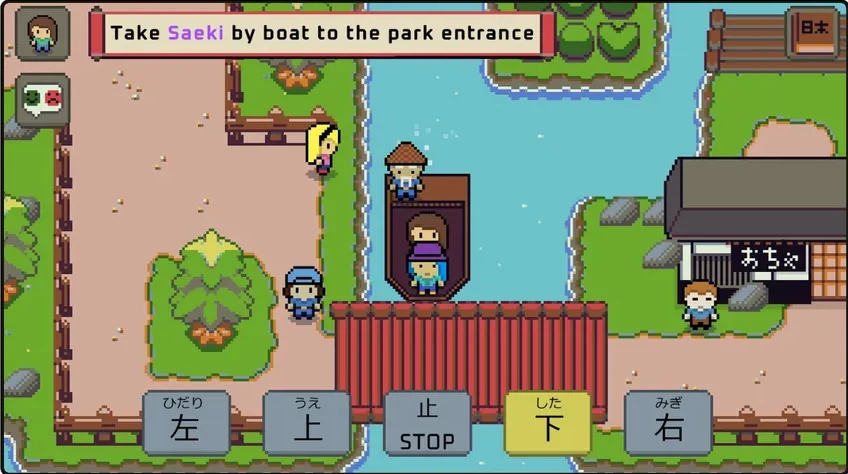
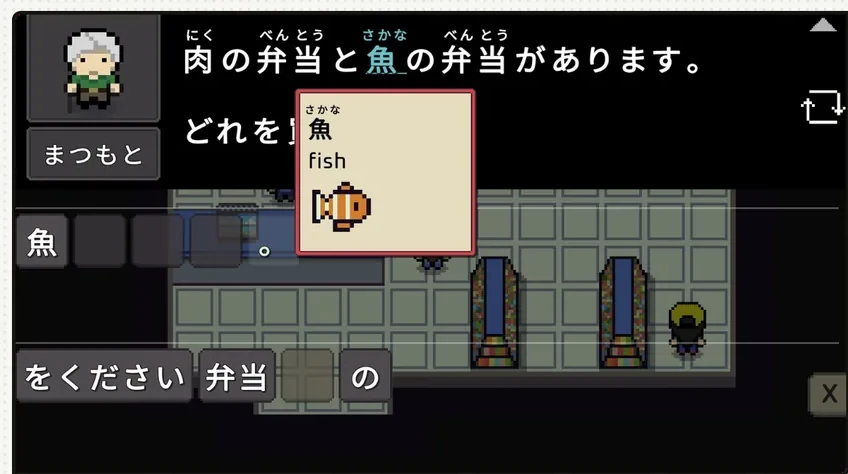
Vocab & Grammar — 5/5. Around 400 words, and it explains the grammar instead of leaving you to guess. Still growing: two of the five planned regions are out so far.
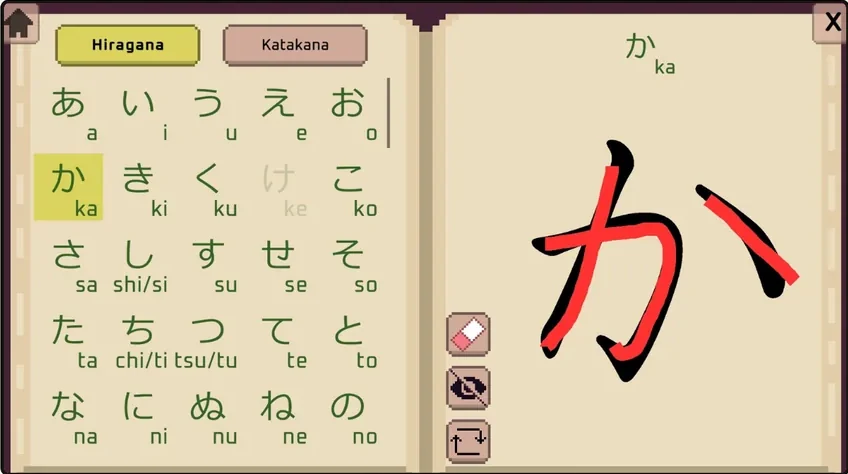
Reading — 5/5. The best game here for reading. Kana from zero with stroke order, plus 195 kanji taught inside the game.
Listening — 4/5. 2,600+ lines voiced by native speakers, so you are hearing real Japanese the whole way through.
Speaking — 0/5. No microphone, and nothing asks you to speak. Pair it with a speaking game to rank up.
Self-Reliance — 1/5. Furigana never switches off. Helpful when you are starting out, but you will have to wean yourself off it somewhere else.
Stats at E Rank · 0–5
Hover or tap a point for why
69 of the 70 reviewers who brought up Duolingo said Wagotabi beat it. One of them wrote: I've reached the same level of Japanese in two days with this game as in 300 days with Duolingo.
Why we recommend this game-dungeon, and what 1,500+ reviewers on Steam said
- Teaches kana from scratch. A lot of beginner games assume you can already read hiragana. This one starts at zero, and is one of the rare few that teaches hiragana characters stroke by stroke. It also uses them in the very next conversation so they actually stick.
- You have to pass tests to advance. Every town ends with a test, and you can't move on until you pass it. Unskippable progress checks matter most for early beginners, because rushing ahead of your skill level is why most give up. 1 in 5 reviewers said previous learning attempts had failed before they tried Wagotabi. One player, after 10 years of learning Japanese:
nothing worked, but this does.
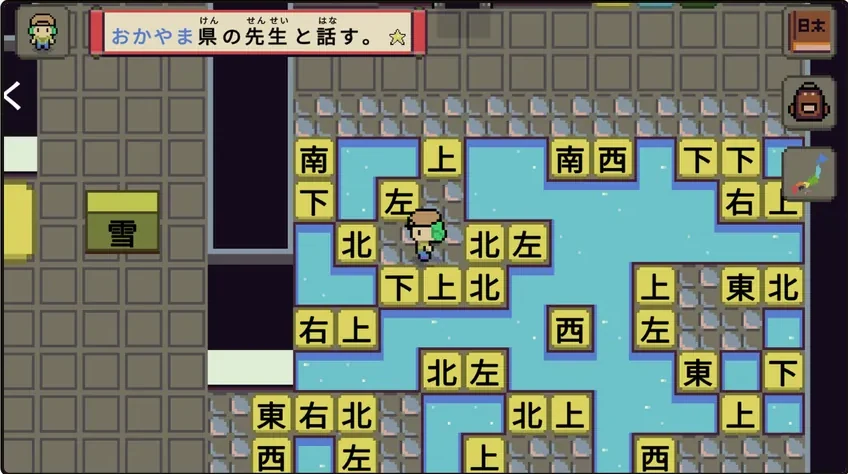
- The gameplay feels like Pokémon but educational. You travel across Japan, talk to characters, and solve puzzles. As of our review, that includes 195 kanji, around 400 words and grammar points combined, and 2,600 voiced lines. Best one-line summary, from one player:
if Pokemon and Duolingo had a baby.
- Speaking of that green owl. 69 of the 70 reviewers who mentioned Duolingo said Wagotabi taught them more. One wrote:
I've reached the same level of Japanese in two days with this game as in 300 days with Duolingo.
Where it falls short — skip it if you already read kana, or want speaking practice
- Slow start if you already know your kana. Early levels can't be skipped, so more experienced learners might find the unskippable opening scenes boring. One reviewer went further, arguing that learners on a clock get
basic entry-level knowledge
and no more. - No speaking at all. Levelling up your speaking skill is needed to clear E Rank, so we don't recommend using Wagotabi alone.
- The game is not yet finished. At the time of our review, two of five planned regions were available. So you might finish the game before you're ready for C rank.
The best E Rank game pick for your early speaking & listening foundation
Noun Town
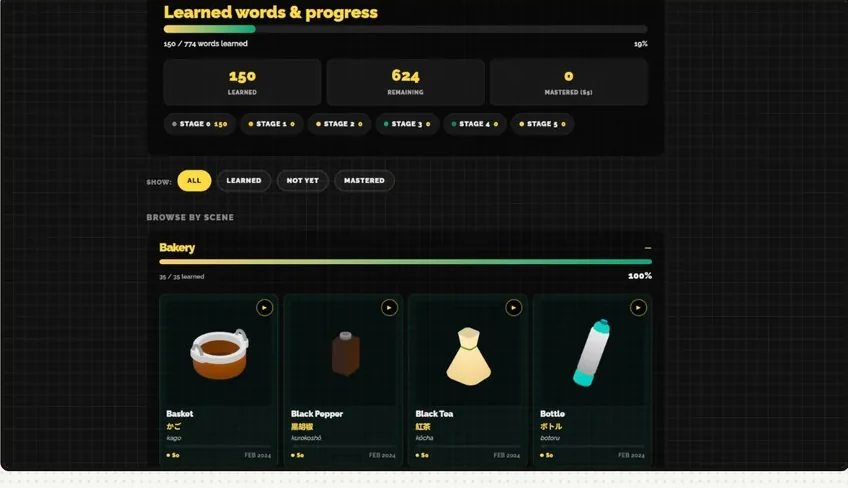
Swipe or scroll — 4 screenshots
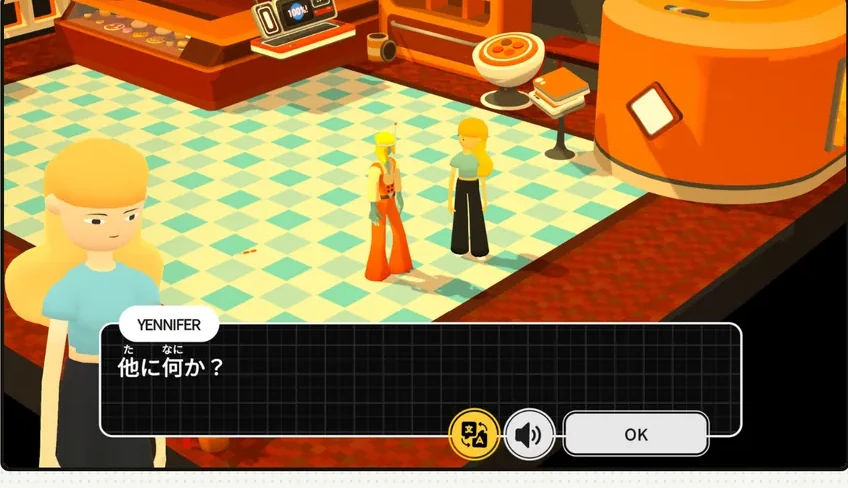
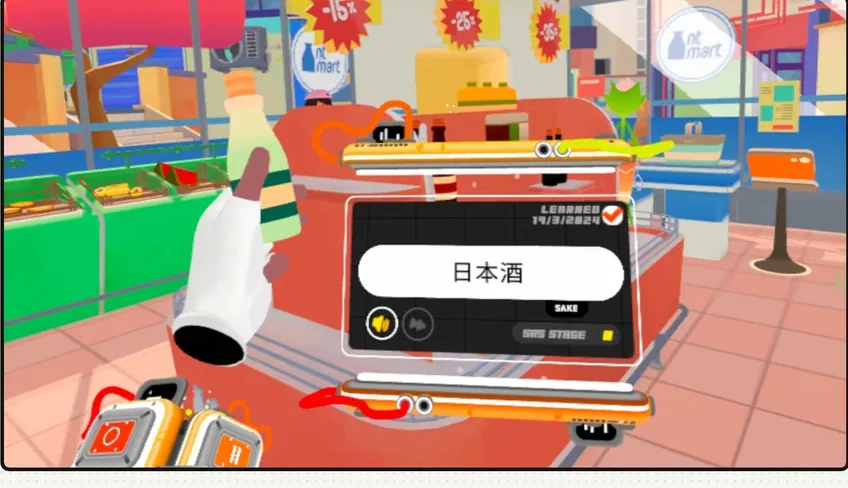
Vocab & Grammar — 3/5. 500 words, each taught as a single object. No grammar at all, so you come away with words but not sentences.
Reading — 1/5. Assumes you already know kana, and shows kanji with no reading help.
Listening — 4/5. Native voices on every word, but only ever single words, never a full sentence.
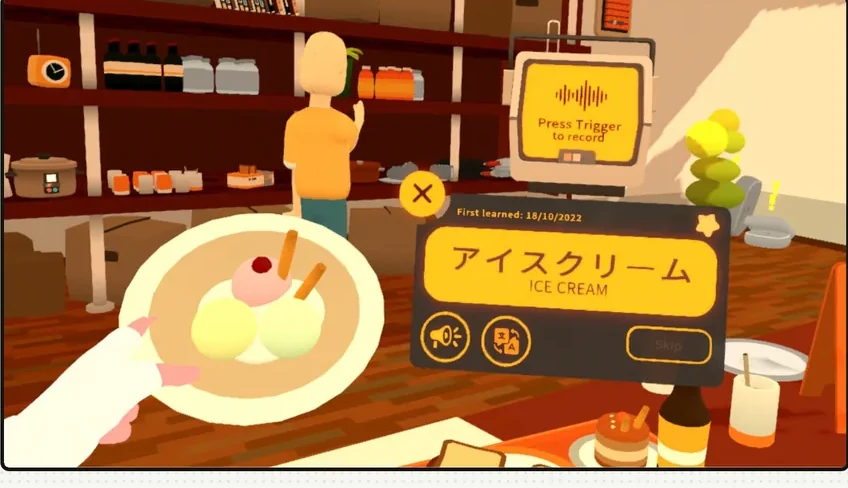
Speaking — 5/5. It listens and scores your pronunciation, word by word. The earliest real speaking practice at E rank.
Self-Reliance — 0/5. The help never goes away, and the game never leaves you to work anything out on your own.
Stats at E Rank · 0–5
Hover or tap a point for why
1 in 4 of 689 reviewers mention speaking — the highest share of any game here. One, an hour in: forces me to confront how terrible my pronunciation is.
Why we recommend this game-dungeon, and what 700+ reviewers on Steam said
- It lets you start speaking ridiculously early. Noun Town eases you into speaking by starting with single words. 1 in 4 reviewers praise the speaking feature, with one saying it
forces me to confront how terrible my pronunciation is.
That matters because most speaking tools start teaching in phrases or sentences. For earlier beginners, practising one word at a time is less overwhelming, and fixes your pronunciation before moving on. - Native audio makes the listening practice feel more real. You hear 16 characters speak, helping you get used to how Japanese actually sounds across different voices, speaking styles and pitches. One player said it
kinda feels like learning from a native speaker friend.
- Its 7 mini-games make revision sessions fun. Learning Japanese takes a lot of review. These mini-games make drilling Japanese into your memory less boring, and they're also required to progress through the main game. 4 in 5 reviewers who mention the mini-games are positive, with Learning Rush singled out as the standout —
incredibly fun and helps to study without it feeling like studying.
Where it falls short — skip it if you can already speak in sentences, or want two-way conversations
- Mic drop, literally. Roughly 1 in 3 Noun Town players who mention the microphone report that it mishears them. One said
[the mic] works like 80% of the time.
- It lets you speak, but not have actual conversations. Characters reply with pre-recorded native lines, so it can't react to anything you say. It's great for practising pronunciation and hearing natural Japanese, but not for actual conversational progress.
- Grammar is thin. 1 in 10 reviewers raise it. The most-upvoted version of this complaint, from a player six hours in:
Great idea for a game, now I just need Grammar Village.
Best E Rank game pick for its early Self-Reliance feature
Hiragana Forbidden Speech
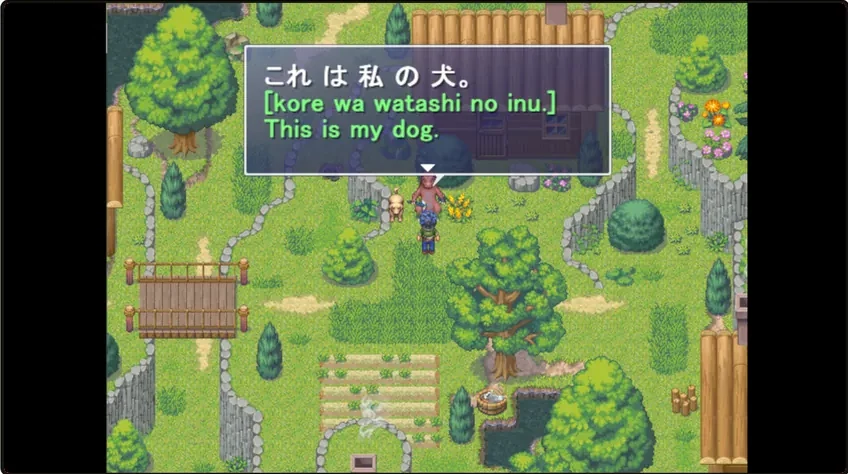
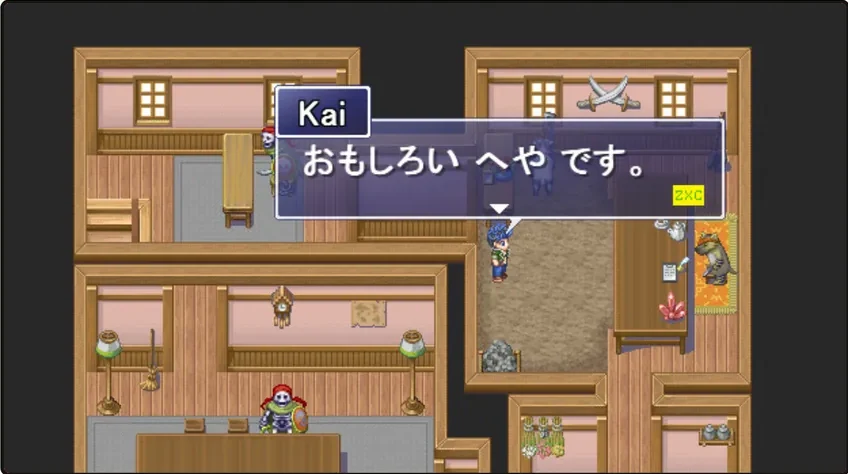
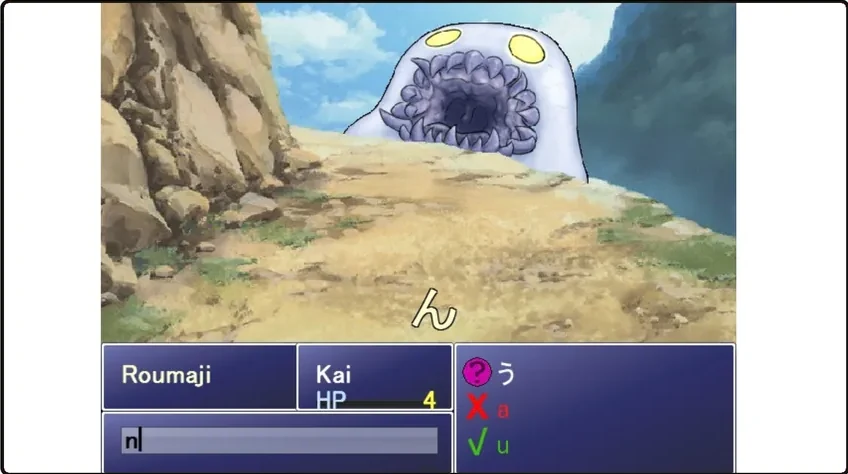
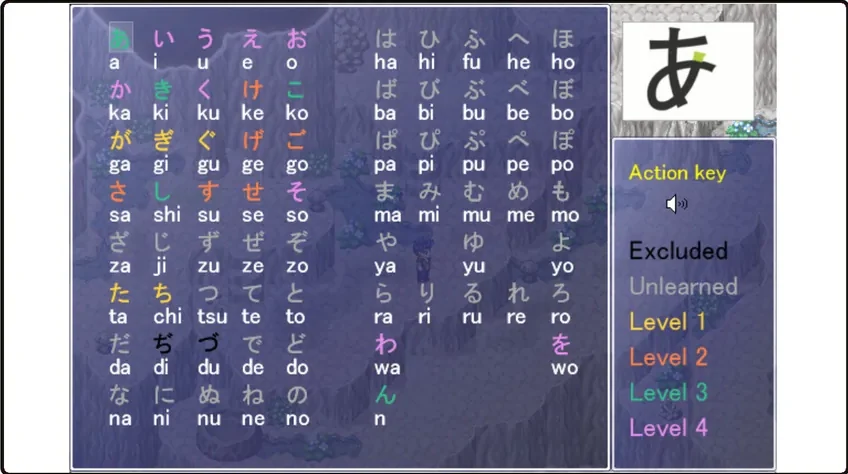
Swipe or scroll — 4 screenshots
Vocab & Grammar — 3/5. 250 words and 50+ grammar tutorials. A complete little course, just a short one.
Reading — 4/5. Teaches hiragana from zero and gets 136 kanji into your hands inside the game.
Listening — 4/5. Professional voice actors and around 18 hours of dialogue, which is more Japanese than most games at this level give you.
Speaking — 0/5. No microphone, and nothing asks you to speak. Pair it with a speaking game to rank up.
Self-Reliance — 5/5. The best Self-Reliance at E rank, though it is only a bonus here. English shows up only for words you have not learned yet, so the help fades as you improve.
Stats at E Rank · 0–5
Hover or tap a point for why
A reviewer on what sets it apart: Most of them are just memorization games that don’t actually teach you the proper context. This game does.
Why we recommend this game-dungeon, and what 250+ reviewers on Steam said
- It starts building Self-Reliance early. As you progress in the game, more dialogue switches into Japanese and gradually makes you rely less on translations. And it stays fun while doing it: 40% of reviewers use the word
fun
, vs 27% for Wagotabi and 31% for Noun Town — the highest share we measured in this guide. - Review is built effectively into every battle. 12% of reviewers mention how effective the game's learning reinforcement is. Most who mentioned this were long-time players. One reviewer praised
how effective the word retention is.
It's easily the game's underrated selling point. - A beginner-friendly game for learners who want more control. You can choose from 7 word-difficulty levels, giving you customization of your learning experience. This flexibility comes up in 13% of reviews, including one player who said it lets you
learn at your own pace without ever feeling stressful or overwhelming.
Where it falls short — skip it if you want to speak from day one, or need lots of words and grammar
- It's a short introductory course. Roughly 250 words, 136 kanji and 50+ grammar tutorials are not enough to graduate from Rank E. One player confessed they
learned them all in two weeks and 20 hours of total play.
This is why it isn't our top rank pick for vocab & grammar. - Its anime-centred script may not be for everyone. 13% of reviewers mention anime, weebs or otaku unprompted. That tracks with the game itself: much of its vocabulary, dialogue and humour is designed around Japanese you hear in anime.
- It doesn't ask you to speak. No speaking, no ranking up unfortunately.
3.2 C Rank — the awkward middle of the intermediate gaijins
You can mostly read a menu, and you know maybe 800 words. Then a real person says something to you and all your brain can produce is ええと (etto).
This is where you shift your focus from mostly learning Japanese to actually producing it. It's arguably the ugliest phase of learning Japanese. You'll sound awkward, maybe even cringey, but everyone who becomes fluent goes through this 'language puberty' phase. The good news? Our game picks below can help you outgrow it faster.
The best C Rank game pick for conversational practice with AI characters you can befriend
Gaijin Mode
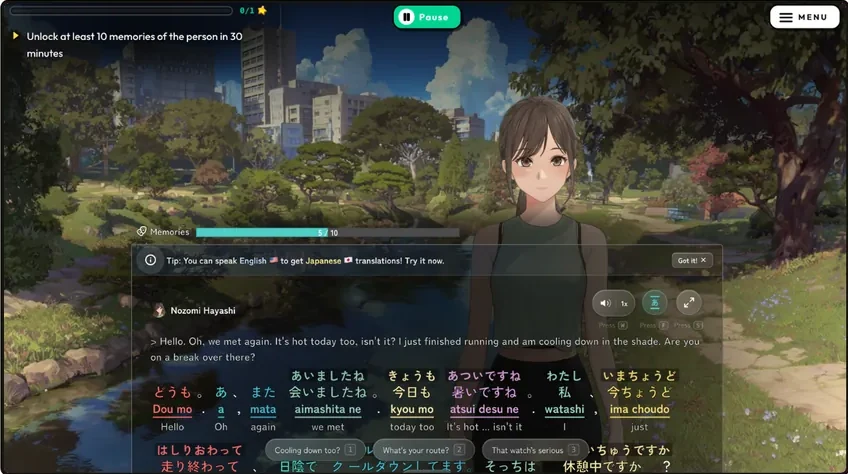
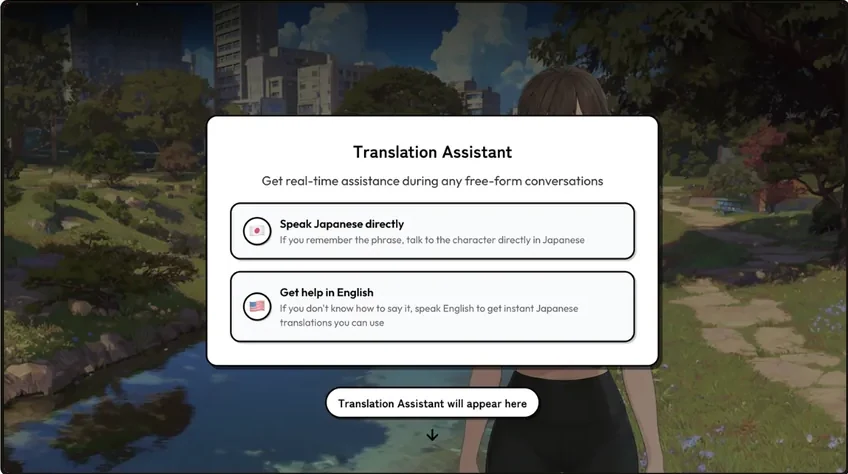
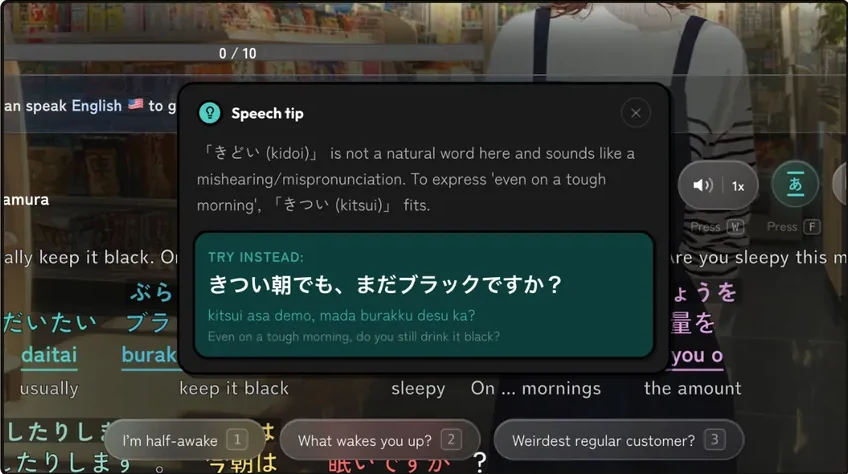
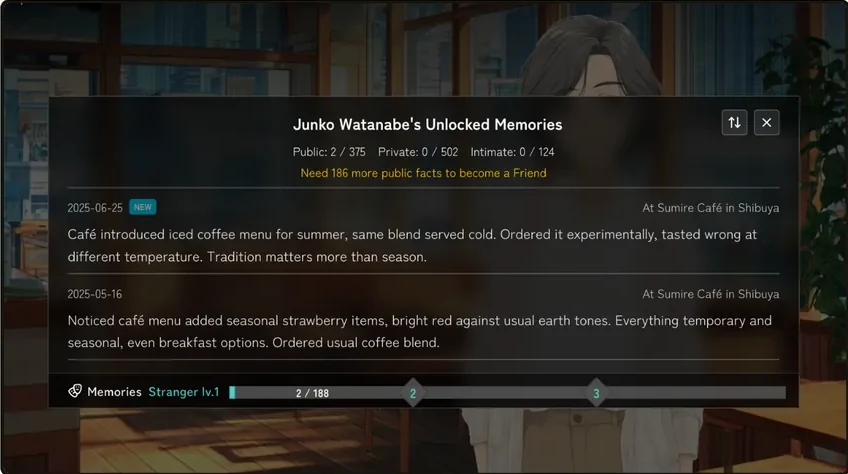
Swipe or scroll — 4 screenshots
Vocab & Grammar — 3/5. Words and grammar arrive inside the conversation, but nothing is explained first and there are no vocab drills.
Reading — 2/5. Expects you to arrive already knowing kana, and kanji is not taught at all. You read what the characters say, and that is it.
Listening — 4/5. Voices that answer you, live and unscripted, across six characters, each with a different speaking style and level of politeness.
Speaking — 5/5. The only game in this guide where you say it out loud, in your own words, and get a real answer back. Change the subject and the characters keep up.
Self-Reliance — 3/5. An English lifeline you can switch off: say it in English and the character hands you the Japanese.
Stats at C Rank · 0–5
Hover or tap a point for why
The only Japanese game where you speak freely and it answers — we checked every other one. No player reviews yet: it's a web beta, and it's ours.
Why we recommend this game-dungeon
- You can have real unscripted conversations anytime. Change the topic, ask random questions, or say something unexpected, and the AI characters keep the conversation going. One user said:
I love how I can improvise & ask other random questions, and the AI characters will still reply!
They also correct your pronunciation and grammar as you go. - Character memories give every conversation something to unlock. Characters reveal more of their memories as you keep talking. It's like getting to know a real friend, with more history, funny stories and shared interests to talk about.
- English translations, if you need them. If you get stuck, say it in English and the character secretly gives you the Japanese, so the conversation keeps moving. It makes speaking less intimidating for newer learners.
- Six characters make you practise six different kinds of conversation and levels of politeness (keigo). Some are friends you speak informally with; others work at a cafe or konbini, where you speak more formally. Different situations mean different ways to practise everyday Japanese.
Where it falls short — skip it if you don't know kana yet, or want to build vocab before you speak
- You should know kana before starting. Gaijin Mode won't teach you hiragana or katakana from scratch. One user notes:
I feel like a beginner who doesn't know a lot of kana will face difficulty in conversing with the NPCs.
- There are no flashcards or structured vocab drills. You learn new words and grammar as they come up in conversation. That works well if you prefer picking things up while speaking, but can feel harder if you want to study the material first or revise it easily afterwards.
- JLPT tracking is still a work in progress. The word-progress map is still in beta and isn't something you can use for spaced repetition practice, so it's not yet ideal if JLPT study is your main goal.
- It can still feel a bit laggy. The conversation experience isn't always perfectly smooth yet.
The best C Rank game pick for learning grammar & vocab through a real RPG
Shujinkou
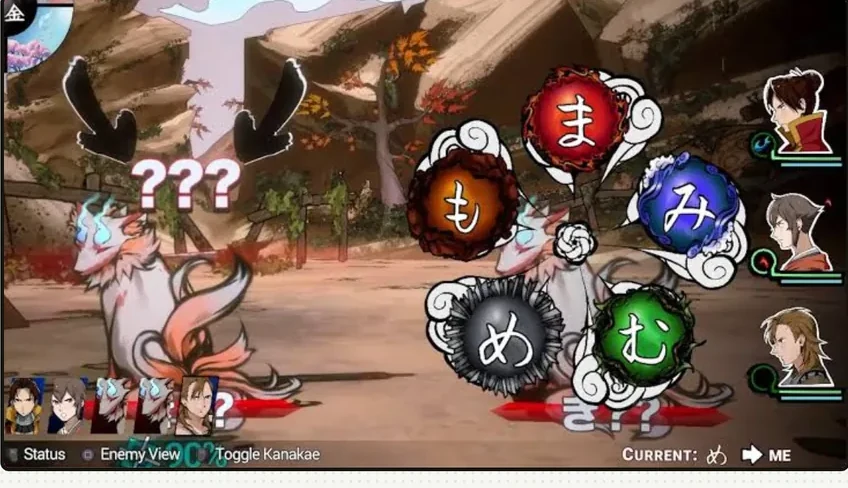
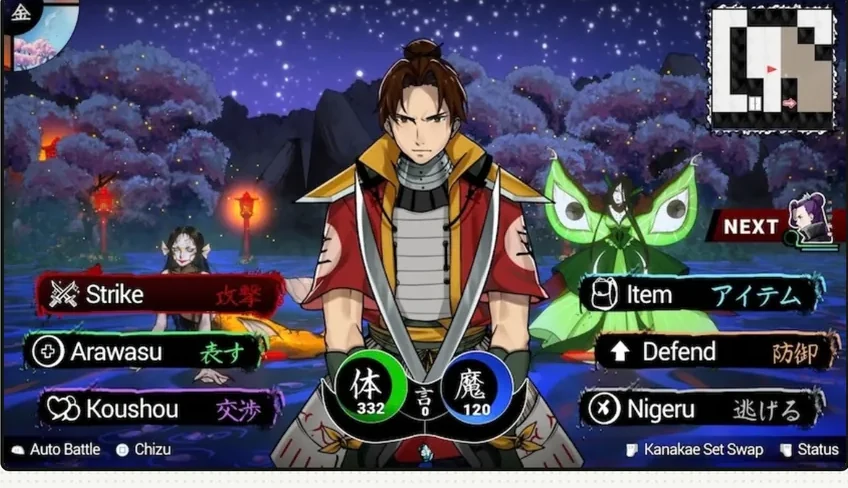
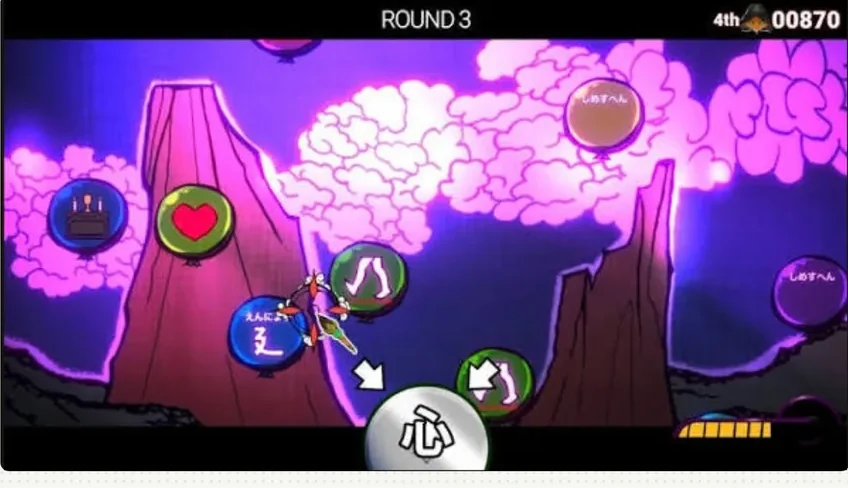
Swipe or scroll — 4 screenshots
Vocab & Grammar — 5/5. Thousands of words and over 100 grammar points, N5 through N3.
Reading — 5/5. Teaches all kana and hundreds of kanji inside the game, with furigana available throughout.
Listening — 4/5. More than 700 voiced lines inside a full JRPG, so the listening comes with story around it.
Speaking — 0/5. No microphone. The game is built around reading and choosing, so pair it with a speaking game at your level.
Self-Reliance — 2/5. Furigana is always on and the learning is largely optional, so you can finish without ever having to cope alone.
Stats at C Rank · 0–5
Hover or tap a point for why
The playtimes are the real review: 490 hours, 301, 215 across just 22 English reviews. It is also the priciest game here, and reviewers bring that up unprompted.
Why we recommend this game-dungeon, and what 20+ reviewers on Steam said
- Enough Japanese content to take you through intermediate level. Shujinkou covers all kana, hundreds of kanji, thousands of words, and 100+ grammar points from N5 to N3. Its 700+ voiced lines add listening practice too. One player said:
I realized how many Hiragana I had learned and how many words and grammar points I've learned.
- It's a real RPG-first game. You get 16 hand-built labyrinths, two story arcs, combat gameplay and side quests, while learning Japanese through the game's dialogue, mechanics and progression. You can also play it on Switch, PS4 or PS5. 80% of reviewers praised Shujinkou for feeling almost like a full-fledged entertainment game; one went further:
I'm just as invested, if not more invested in the world and the gameplay mechanics as I am to learn Japanese.
- Some of the highest playtimes we've seen from learning games. 1 in 6 reviewers logged over a hundred hours; the highest at 489. That's rare for a learning game. That player 489 hours in simply called it
a game you'll love or hate.
After that much playing, take a guess which side they landed on.
Where it falls short — skip it if you're on a budget, need structure, or don't enjoy grinding
- It's expensive. Around 1 in 3 reviewers bring up the price unprompted. One calls the price tag
the sort of elephant in the room.
- Ironically, learning Japanese is optional. The developers' own word, not ours. One player said they
didn't engage too much with the Japanese learning parts.
Great for self-directed learners; less so if you need the game to make learning unavoidable. - Learning progress can feel slow, especially if you don't love dungeon crawling. Shujinkou takes its time introducing new language content. One experienced learner found it frustrating to spend
30 + hours collecting hiraganga [sic] and katakana orbs
before moving past the basics. Around 3 in 10 reviewers mention grind or difficulty, so you need to enjoy the core dungeon-crawling loop.
3.3 A Rank — the advanced gaijin learns to rely on themselves
At lower ranks, language games are built with support to help you learn: furigana above unfamiliar kanji, English translations one tap away, hints when you get stuck. But eventually, that help becomes something you depend on. A true A Rank player is someone who turns away from all that help.
There's another problem: most Japanese learning games eventually run out of Japanese. They're built for beginners and intermediates, so once you know thousands of words and need harder, more natural Japanese, you outgrow them. Frankly, no single learning game has been built to carry you through A Rank yet.
So instead, build your own game dungeon out of things you already enjoy.
Quest for Listening Self-Reliance: watch your TV shows, subtitles off
You build listening self-reliance by following spoken Japanese even when some words go over your head.
Watch a Japanese anime or drama you already love with subtitles turned off. You might not catch everything, but that's the point. Listen closely to the words you do understand, the characters' reactions, and what's happening on screen to piece together enough to follow the scene, all while not pausing the episode. Think of it as eavesdropping for educational purposes.
Quest for Reading Self-Reliance: play your favourite game in full Japanese
You build reading self-reliance by learning to keep reading on even when you don't understand every word.
Go back to playing Pokémon or Persona 5 or whatever game you'd happily spend 50+ hours on, but this time, switch the language to Japanese. Entertainment games give you hundreds of hours of exposure to vocabulary and grammar through dialogue and gameplay.
When you see a word or sentence you don't know, use the story, characters and what's happening on screen to work out enough meaning to keep playing. The key is to understand Japanese contextually, instead of translating it right away.
Not sure what to play? Game Gengo's list of Japanese entertainment games compares games by difficulty, vocabulary level (up to N1), whether it has kanji, and other learning-friendly features.
Quest for Speaking Self-Reliance: have unscripted conversation daily
You build speaking self-reliance by learning to keep a conversation going even when you don't know exactly how to say something.
Talk about your favourite hobbies, your chaotic day at work, or how you literally bumped into your crush at the konbini. And when you don't know a word, don't immediately switch to English. The real test here is being able to describe it another way using the Japanese you already know.
It doesn't matter whether you strike up a conversation with a tutor, AI conversation partner, or language-exchange friend. Just keep the conversation unscripted.
3.4 S Rank — live in Japanese
Surprise! There is no S-rank dungeon. At this point, Japanese is something you regularly use in real life.
So spend time with Japanese-speaking friends. Work or study somewhere Japanese is used. Move to Japan, if you can. You don't have to literally live there; Japanese just needs to become part of how you live.
That's S Rank: stop training for Japanese and start living in it. And that's the end game. Sugoi ne~~~
4. Side quests worth taking
Our Main Quest picks are the games we'd use to progress through ranks. Side Quests are games that do one particular thing unusually well, or may simply click better for a certain kind of learner. Three are worth calling out here.
4.1 When you are a visual learner or have photographic memory
Side quest pick for visual learners
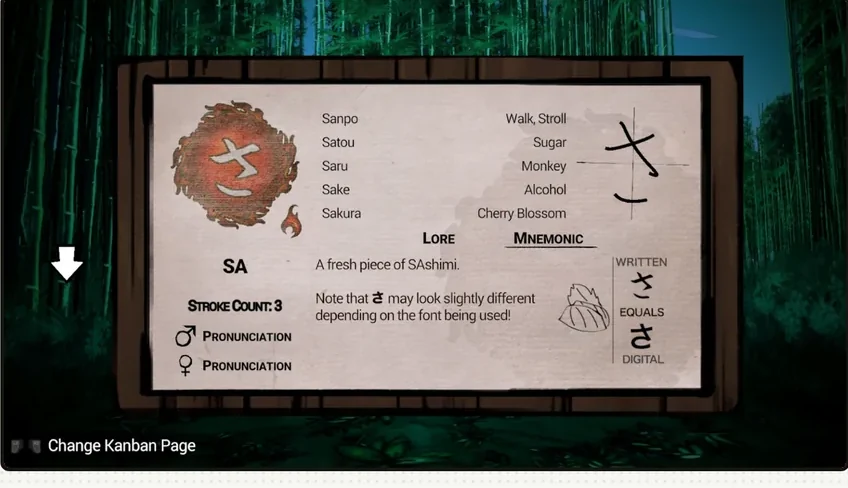
Shashingo
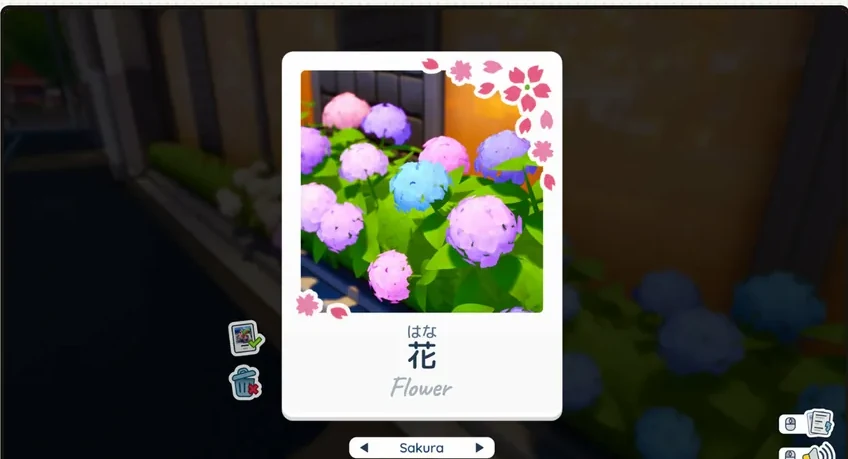
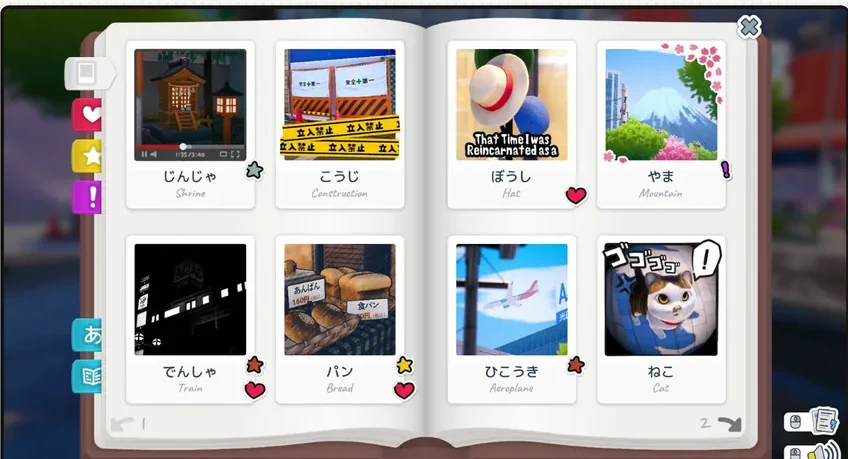
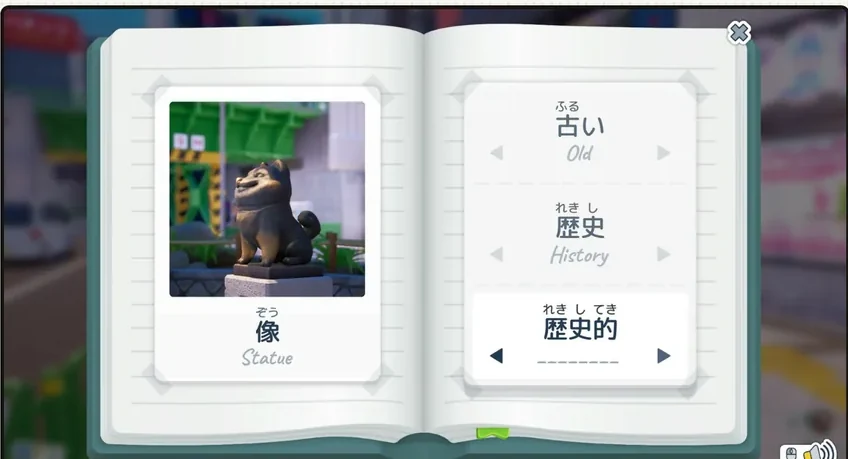
Swipe or scroll — 4 screenshots
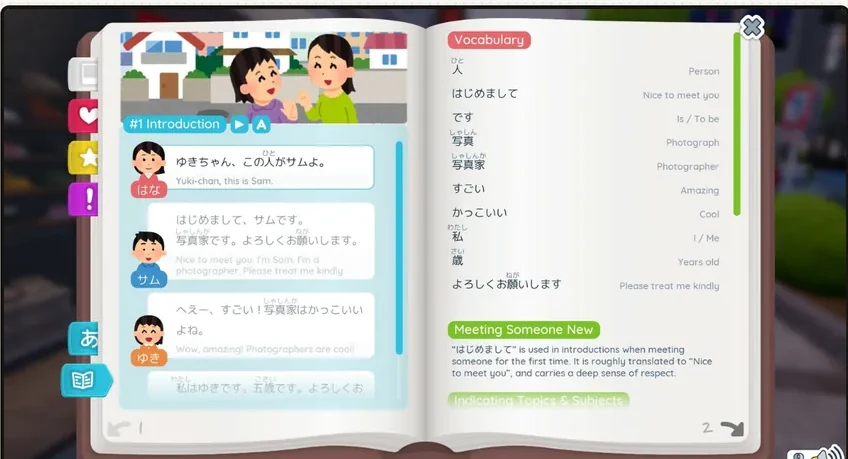
Vocab & Grammar — 3/5. At 145 words and no grammar at all, it is a vocabulary companion.
Reading — 2/5. Expects you to know kana already, though kanji on photographed objects comes with reading help.
Listening — 3/5. Native audio on every word you capture, but single words only.
Speaking — 0/5. No microphone.
Self-Reliance — 1/5. Furigana appears on every photographed word and does not go away.
Stats at E Rank · 0–5
Hover or tap a point for why
The complaints are about length, not quality. One reviewer finished it in under 3 hours.
A companion to a course, not a course.
Why we recommend this game-dungeon, and what 600+ reviewers on Steam said
- The best game for visual learners in this guide. 28% of reviewers love the photography mechanics. Photograph a vending machine or postbox, and you get to keep the photo complete with the object's kana, kanji and audio pronunciation. One player said it
probably doubled the speed at which I memorized common nouns.
- The game makes studying unusually relaxing. Nearly 1 in 5 reviewers describe Shashingo as relaxing or cosy. You wander a small Japanese neighbourhood, take photos, and learn at your own pace. One reviewer praised how
the atmosphere in the city is relaxing and the music is just calming.
- It actually makes you recall what you photograph. Find Mode sends you back into the world to locate Japanese words from memory, while Quiz Mode tests the vocabulary directly. One reviewer found that
with a little daily practice in quiz mode, [it] is surprisingly effective for learning basic phrases.
Where it falls short — skip it if you want one game to teach you from scratch, or to play for dozens of hours
- 11% of reviewers say the game needs more content. There are only 145 objects to photograph, so the game ends quickly. One reviewer said
you can finish the game in 2 hours
even while taking time to explore. Another:the entire map is only a block or 2.
- It won't handle long-term review for you. There's no spaced repetition system that automatically brings back words you're about to forget. 15% of reviewers mention supplementing Shashingo with Anki or other flashcards. One reviewer put it simply:
Alone it's probably not very helpful.
7% of reviewers say outright that it can't teach you from scratch or carry you for dozens of hours.
4.2 When you're specializing as a kanji monster
Side quest pick for kanji writing
Kanji Cats
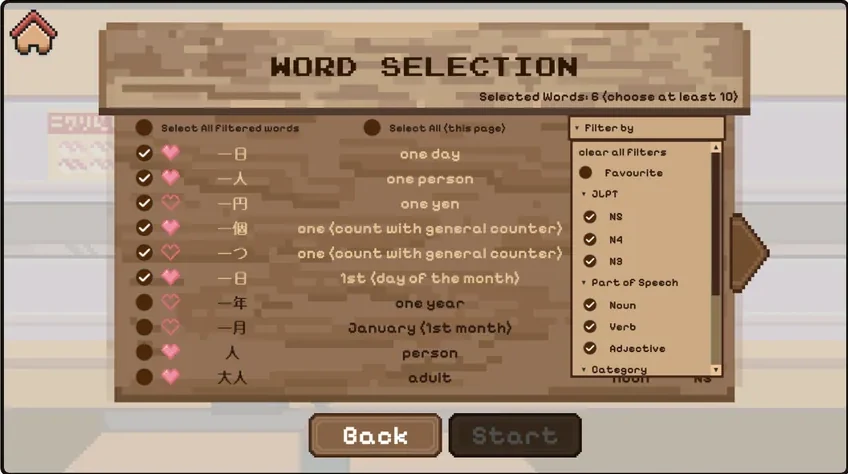
Swipe or scroll — 4 screenshots
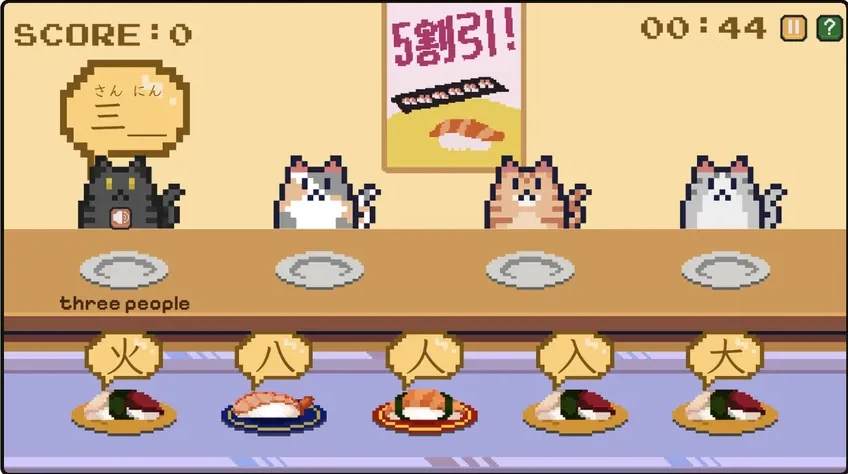
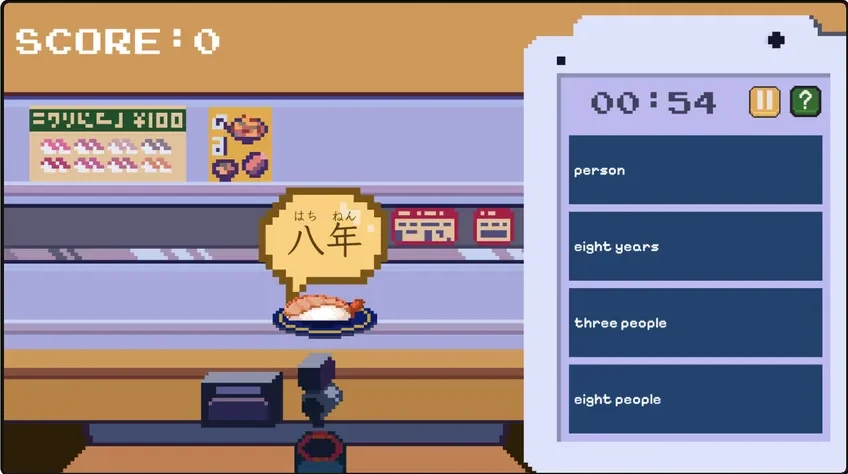
Vocab & Grammar — 4/5. Thousands of words covering N5 through N1, which is a lot of ground. But no grammar is taught.
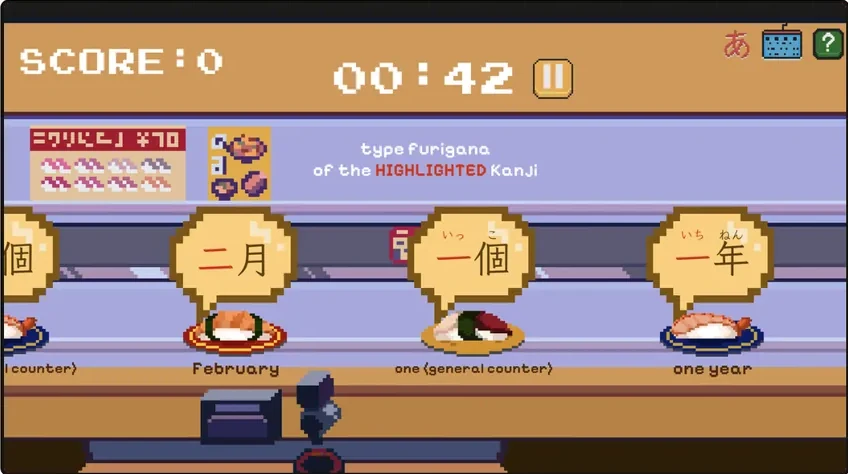
Reading — 5/5. The sharpest kanji drill in the guide: you type the reading instead of picking from four options, and you can filter by level or topic.
Listening — 1/5. Barely any audio.
Speaking — 0/5. No microphone.
Self-Reliance — 1/5. No reading help at all. But with only kanji on screen there is nothing to be weaned off, so it never has to teach you to cope.
Stats at C Rank · 0–5
Hover or tap a point for why
imo one of the most polished games of its type, and has great customizability.
Only eight reviews exist, so buy on the demo rather than the rating.
Why we recommend this game-dungeon
- Huge vocabulary coverage is impressive for such a cute game. Drill thousands of words by JLPT level up to N1, by topic, or by choice of cat. Few learning games go this deep. It suits a focused 20–40 minute drill when you know what you need to practise.
- The kawaii factor makes people forget they're memorizing. One reviewer said:
The cute cats and great practice methods really help things stick. For me, the typing mode works the best, and having 4 different game modes ensures I don't get bored while memorizing.
- You have to recall words by typing. Instead of picking from multiple choice, you type the word from memory, which forces active recall instead of simple recognition.
- Radical mode makes kanji less intimidating by breaking kanji into smaller, reusable pieces. One reviewer said
breaking kanji down into smaller parts makes the whole thing feel a lot more manageable.
Where it falls short — skip it if you need a story to stay motivated, or want the game to plan your reviews
- You're expected to know kana already. This isn't where you learn hiragana or katakana from scratch.
- No spaced repetition system, so you have to manually pick your own review sets. And the scheduling is on you.
- The gameplay is still mostly drilling. If the cats lose their charm or novelty, repeating words and kanji can start to feel repetitive.
4.3 When you want to learn Japanese through romance (NSFW)
Side quest pick to learn Japanese rizz
Love Language Japanese
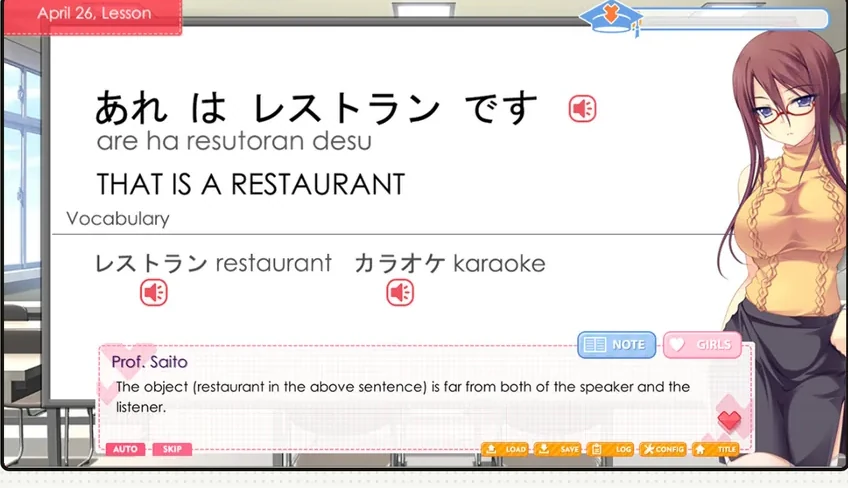
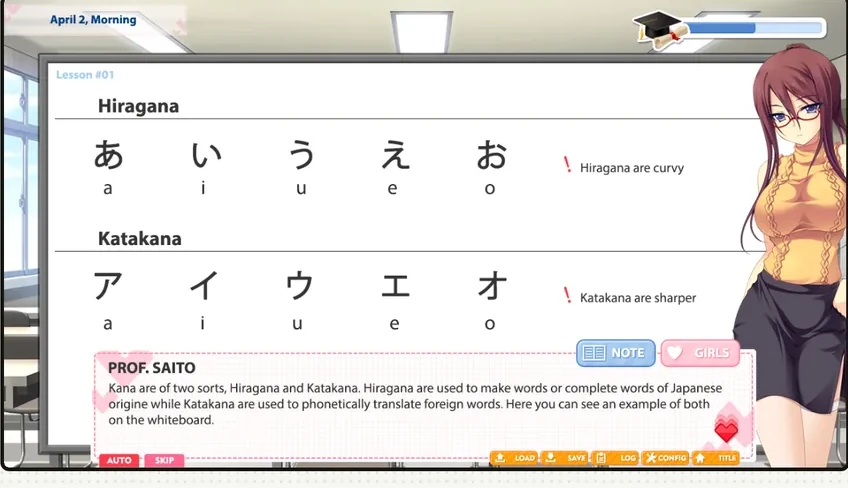
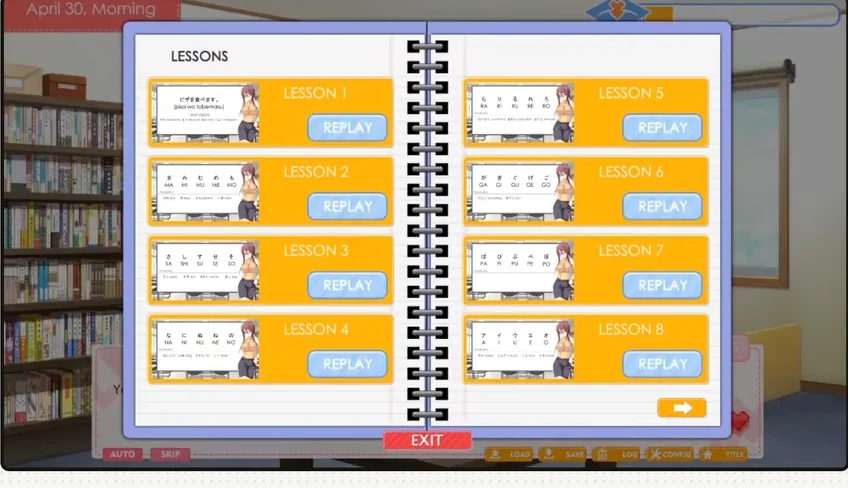
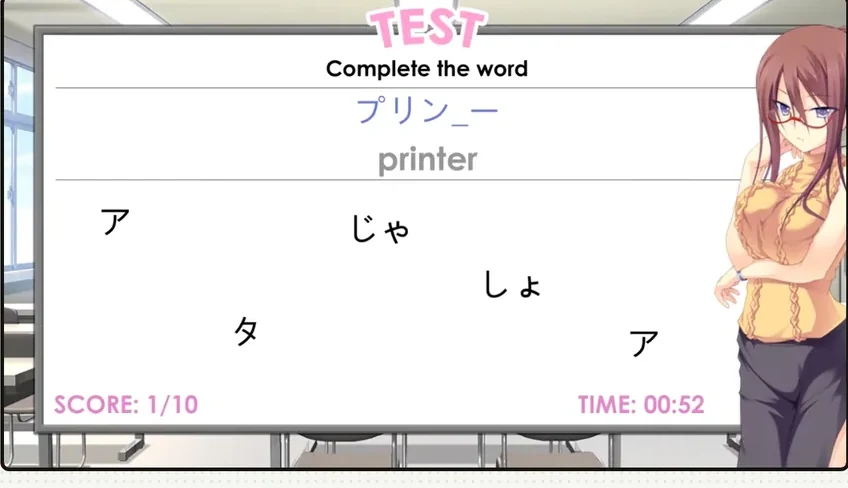
Swipe or scroll — 4 screenshots
Vocab & Grammar — 3/5. The basics are covered, but some of the test content has been reported wrong since 2019.
Reading — 4/5. Teaches kana from zero and does that part well.
Listening — 2/5. Lesson audio exists, but the dialogue itself is unvoiced, so there is less listening here than the format suggests.
Speaking — 0/5. No microphone.
Self-Reliance — 0/5. Full English translations throughout, so you are never reading Japanese without English beside it.
Stats at E Rank · 0–5
Hover or tap a point for why
Abandoned since 2019, so its bugs are permanent. The second-most-helpful review of 134 is a quiz that marks the right answer wrong.
Why we recommend this game-dungeon, and what 150+ reviewers on Steam said
- It's a dating sim with a real beginner Japanese course underneath. 22% of reviewers mention the romance, while 21% call the game fun. But the game also packs 50+ lessons and tests on kana, basic vocabulary and simple sentences. A review upvoted 223 times expected a
wifu simulator [sic]
and was surprised to find a real beginner course. - You can start with zero Japanese. It teaches hiragana and katakana first, then moves into numbers, time, directions, everyday phrases and simple sentences. The game tells you what to learn next, so there's no study plan to build yourself.
- Timed tests can speed up your kana recognition. Eventually, you have to recognize characters on sight instead of slowly sounding them out. One player said the game trained this pretty effectively.
Where it falls short — skip it if you need a reliable main resource; it's much safer as a side quest
- Some of the Japanese it teaches is wrong. One review with 194 upvotes shows a test incorrectly grading それ vs これ. Others flag typos and mistakes, including a 2024 review citing
blatant mistakes in the test content.
- The tests can reward guessing and speed. 12% of reviewers say some answers are easy to guess, while later tests give you just 60 seconds for 10 questions. One reviewer called them
more of a speed challenge than anything.
- It's buggy and hasn't had a major update since 2019. 12% of reviewers report issues like repeated questions and missing content.
NSFW as it has suggestive content but no explicit scenes.
5. The era of Japanese language games has only begun
At the start, we told beginners not to jump straight into Pokémon or Persona in Japanese. By A Rank, we tell you to do exactly that. That's because the game you need changes as your Japanese gets better. Beginners need tons of learning support while advanced learners need to learn how to use Japanese on their own.
For years, most language games were limited by what technology could do. They could check whether you picked the right answer, matched the kanji, or passed the quiz. Only recently have they been able to listen, react, and talk back in real time.
Great learning games and great entertainment games are still mostly separate today. The future of Japanese learning games probably looks more like an actual video game where Japanese is both immersive and playable: talk your way through hours of quests, build relationships with characters, explore the world, and unlock harder challenges as your Japanese improves.
Until then, pick your rank, choose your dungeon, and keep solo-levelling up.
Made it to the end? Here's your final reward: every Japanese-learning game we scored and reviewed, in one table. 頑張って~ (ganbatte; good luck) See the full list
6. Full methodology: how we score every game
Here's how we scored every game, and how you can judge one we may not have reviewed yet.
Every skill follows the same path: E → C → A → S. Target
shows what you should be able to do by the end of that step. What a game should do
shows what the game needs to train to get you there.
If a game doesn't train a skill, it gets a 0. That doesn't automatically make it a bad game. Most games are good at a few things, which is why this guide pairs different game-dungeons together to level up.
Vocab & Grammar — knowing the words and building the sentences
| Step | Target | What a dungeon must do |
|---|---|---|
| E → C | ~800 words, N5 grammar. You know the main particles (は・が・を・に・で), te-form, and past tense. | Teach new words in a clear order, bring them back until you remember them, explain basic grammar, and make you build sentences. |
| C → A | ~4,000 words, N4–N3 grammar; you're starting to choose Japanese that sounds natural, not just textbook-correct. | Teach grammar through real sentences, bring back things you've forgotten, and show you how Japanese is actually used. |
| A → S | 6,000+ words; you can choose words based on tone, meaning and how formal you want to sound. | No single language game does this well yet. Use advanced Japanese content. |
Reading — reading Japanese with less help
| Step | Target | What a dungeon must do |
|---|---|---|
| E → C | You can read hiragana and katakana without stopping, and know your first ~100 kanji with furigana. | Teach kana until reading feels automatic. Then introduce kanji with furigana and test whether you remember the readings. |
| C → A | You know roughly 300–1,000 kanji, rely less on furigana, and can work through manga with a dictionary nearby. | Teach lots of kanji, test both reading and meaning, and make you type or write answers — not just recognize them. |
| A → S | You know 2,000+ kanji and can read normal Japanese without much help, including handwriting and unusual fonts. | No single language game does this yet. Read Japanese books, games, articles and other native material. |
Listening — understanding Japanese as it speeds up
| Step | Target | What a dungeon must do |
|---|---|---|
| E → C | You understand common words and phrases, then simple sentences spoken slowly. | Use native Japanese audio, then short conversations you can replay or slow down. |
| C → A | You can follow several minutes of Japanese at almost normal speed, even when you miss some words. | Give you longer conversations, different voices and more natural speed, with less need for a transcript. |
| A → S | You can follow a full episode or long conversation without subtitles or constantly stopping. | No better way than native Japanese media. |
Speaking — speak Japanese out loud, in real time
| Step | Target | What a dungeon must do |
|---|---|---|
| E → C | You can say single words clearly, then say two or three sentences before getting stuck. | Listen to what you say, correct you, and move you from repeating lines to making your own answers. |
| C → A | You can handle everyday exchanges and keep an unscripted conversation going for several minutes. | React to what you actually say, move from guided situations into free conversation, and help you recover when you get stuck. |
| A → S | You can stay in Japanese for a long conversation — and joke, argue, persuade and banter naturally. | Use a tutor, AI partner or language-exchange partner, as long as the conversation stays unscripted. |
Self-Reliance — keeping going when you don't understand everything
| Step | Where you are | What a dungeon must do |
|---|---|---|
| E → C | n/a | n/a |
| C → A | You can say the same idea another way, ask what someone means, and recover after missing a sentence. | Slowly remove translations and furigana. Make you work around words you don't know and guess meaning from context. |
| A → S | Unknown Japanese no longer stops you. You understand enough to keep going. | There shouldn't be any learning support. Use real Japanese and learn to deal with the gaps yourself. |
7. All the Japanese learning games we found, reviewed
Here's every Japanese-learning game we could find, sorted by the rank it helps most.
How scoring works: 0 means the game doesn't train that skill. 5 means it's one of the strongest games we found at that rank. Scores only compare games inside the same rank — a 5 at E Rank and a 5 at C Rank are very different amounts of Japanese. Lots of games score 0 in two or more skills. That's normal. Most games specialize, which is why we pair them up.
E Rank — Beginner Gaijin
Self-Reliance is still a bonus here.
| Game | Stats | Our verdict | Words & grammar | Kana | Kanji | How you answer | Audio | Speaking | Support |
|---|---|---|---|---|---|---|---|---|---|
Wagotabi
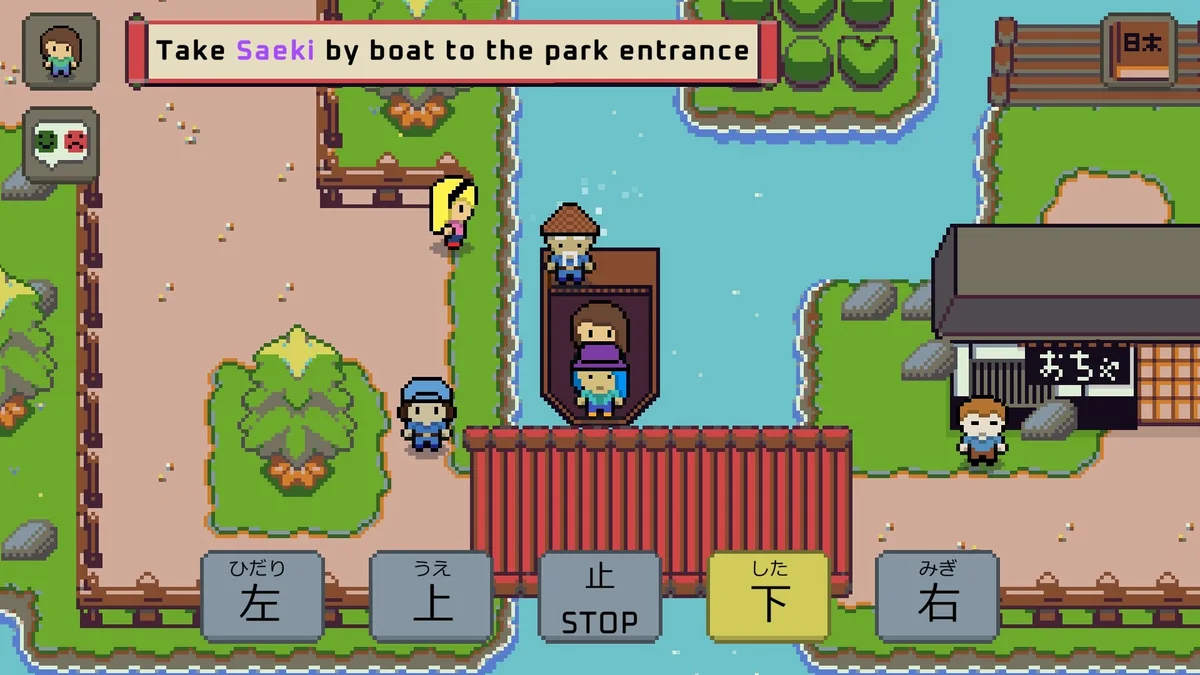
| Vocab & Grammar5Reading5Listening4Speaking0Self-Reliance1 | Best for building your foundation. Teaches kana from zero and is strongest here for vocab, grammar and reading. Pair it with a speaking game. | ~400 words, grammar taught | Teaches from zero, with stroke order | 195, taught in-game | You build sentences | Native voices, 2,600 lines | No microphone | Furigana always on |
Noun Town
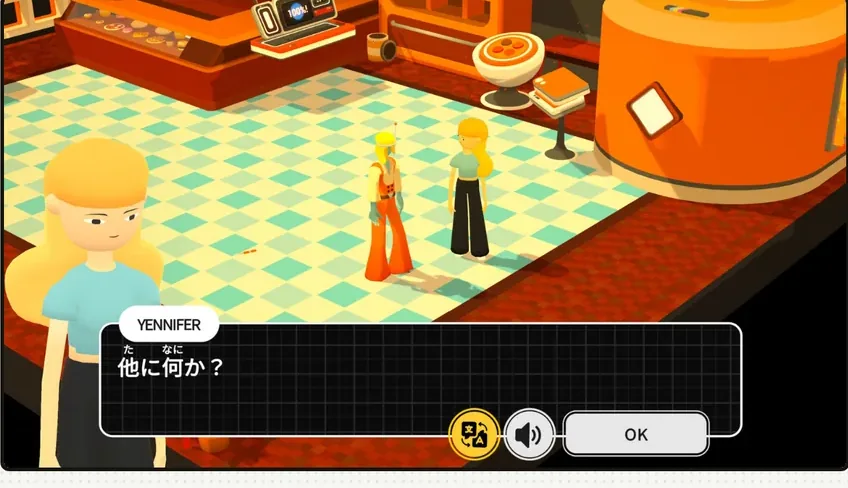
| Vocab & Grammar3Reading1Listening4Speaking5Self-Reliance0 | Best for speaking early. It listens to you and gets you speaking sooner than any other E Rank game here, but it assumes you already know kana. | ~500 words, no grammar | Expects you to know kana | Shown with no reading help | You pick from options | Native voices, single words only | Listens to you, single words | Kanji with no reading help |
Hiragana Forbidden Speech
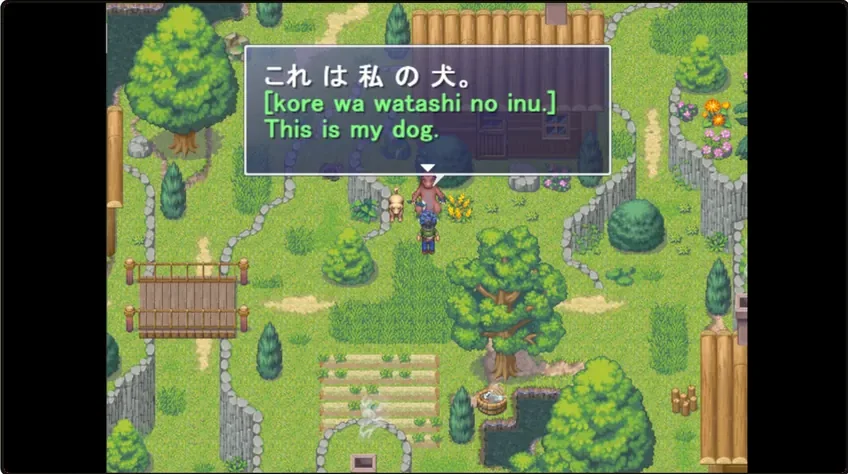
| Vocab & Grammar3Reading4Listening4Speaking0Self-Reliance5 | The fun route through kana, and the best here for early Self-Reliance. Support disappears as you improve, but the course is small. | ~250 words, grammar taught | Teaches hiragana from zero | 136, taught in-game | You pick from options | Pro voice actors, 18h of dialogue | No microphone | English shown only for words you haven't learned |
Duolingo
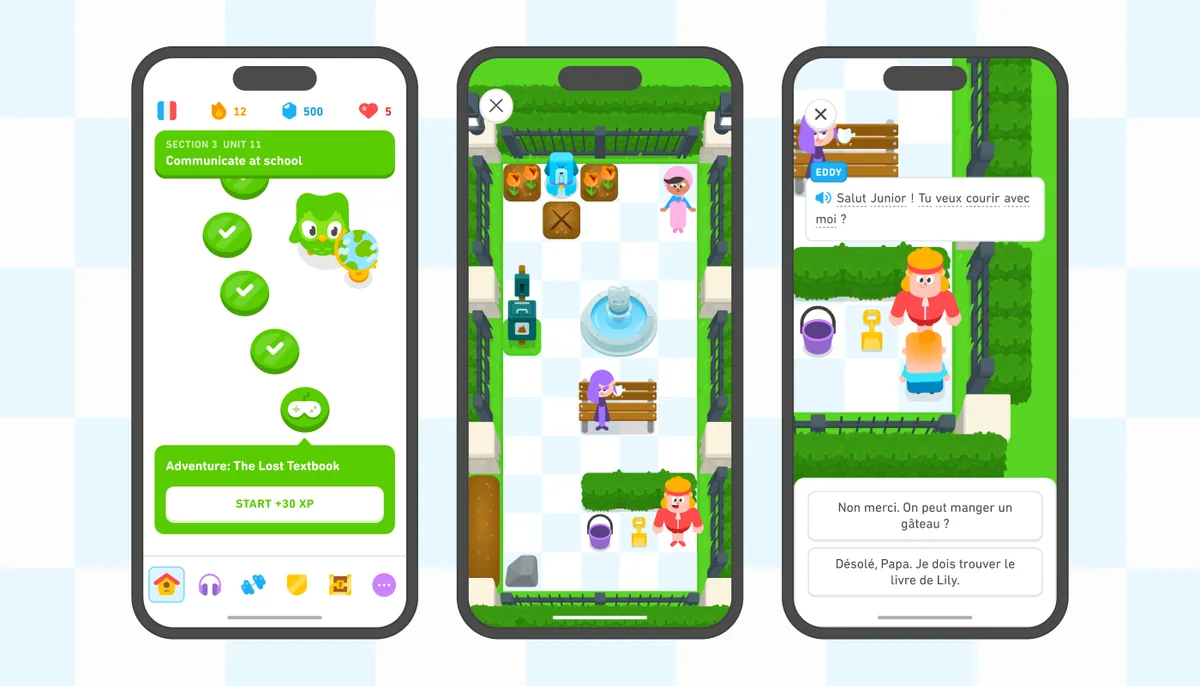
| Vocab & Grammar4Reading3Listening2Speaking1Self-Reliance0 | Very good at getting you to show up every day; weak at getting you to produce your own Japanese. Here as the familiar benchmark. | Lots of words, grammar never explained | Teaches, but no stroke order | A few, with reading help | You pick from options | Synthetic voice, full sentences | Listens to you, set phrases | Full translations throughout |
Lingo Legend
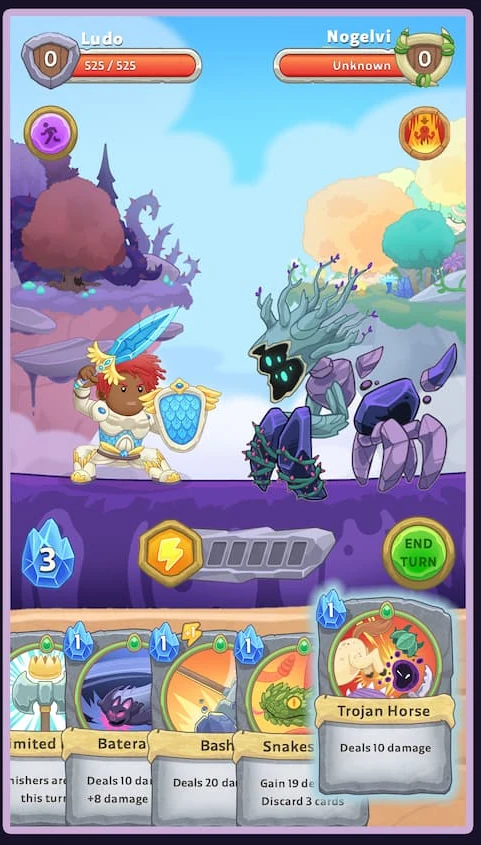
| Vocab & Grammar4Reading3Listening2Speaking0Self-Reliance0 | The highest-rated game in this guide, and a real deck-builder rather than a quiz with a skin. Phone only, and the free tier runs out after a few minutes a day. | 3,000+ words and phrases, grammar taught | Taught in-game | Taught, depth not published | You type the answer | Voiced words, quality criticised | No microphone | English always shown |
Shashingo
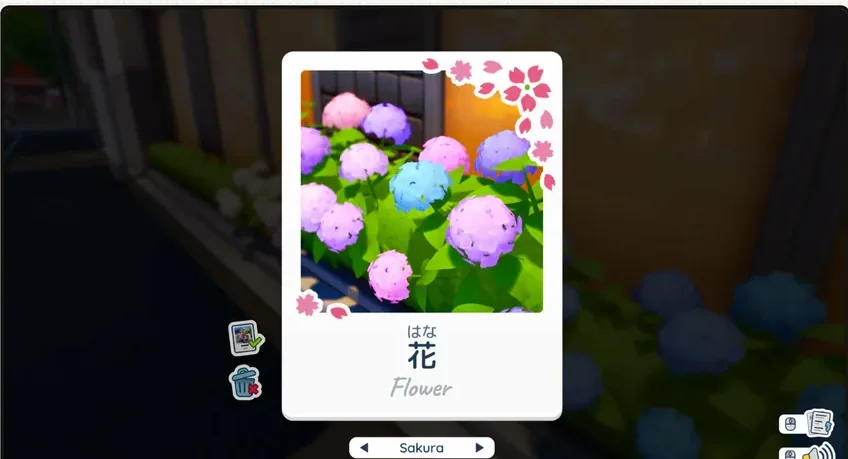
| Vocab & Grammar3Reading2Listening3Speaking0Self-Reliance1 | Best for visual vocabulary. You turn objects you photograph into Japanese flashcards. A companion, not a course. | ~145 words, no grammar | Expects you to know kana | On photos, with reading help | Never tests you again | Native voices, single words only | No microphone | Furigana on every photographed word |
Love Language Japanese
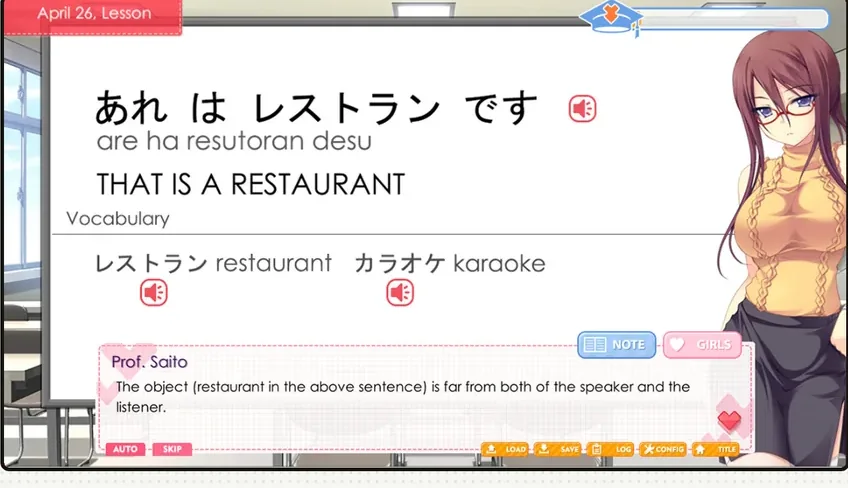
| Vocab & Grammar3Reading4Listening2Speaking0Self-Reliance0 | The only dating sim here, and it teaches kana from zero. Abandoned since 2019, and some of its test content is wrong. | Basics, and some are wrong | Teaches kana from zero | About 8 characters | Quizzes you can guess | Lesson audio, no voiced dialogue | No microphone | Full translations throughout |
LJTS: Hiragana Battle
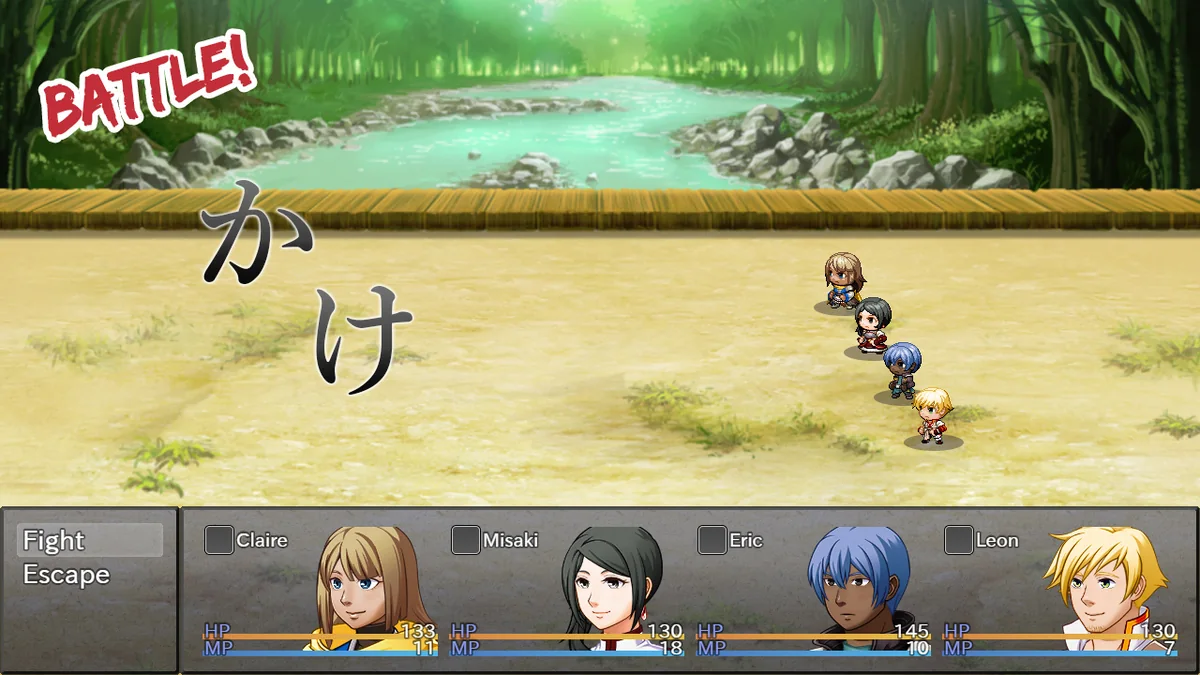
| Vocab & Grammar2Reading4Listening2Speaking0Self-Reliance0 | A cheap, heavily reviewed way to learn hiragana inside an old-school RPG. It shows its age and can feel grindy. | Basic words, grammar not explained | Teaches hiragana from zero | None | You pick, in battle | Voiced, quality criticised | No microphone | English and furigana throughout |
LJTS: Katakana War
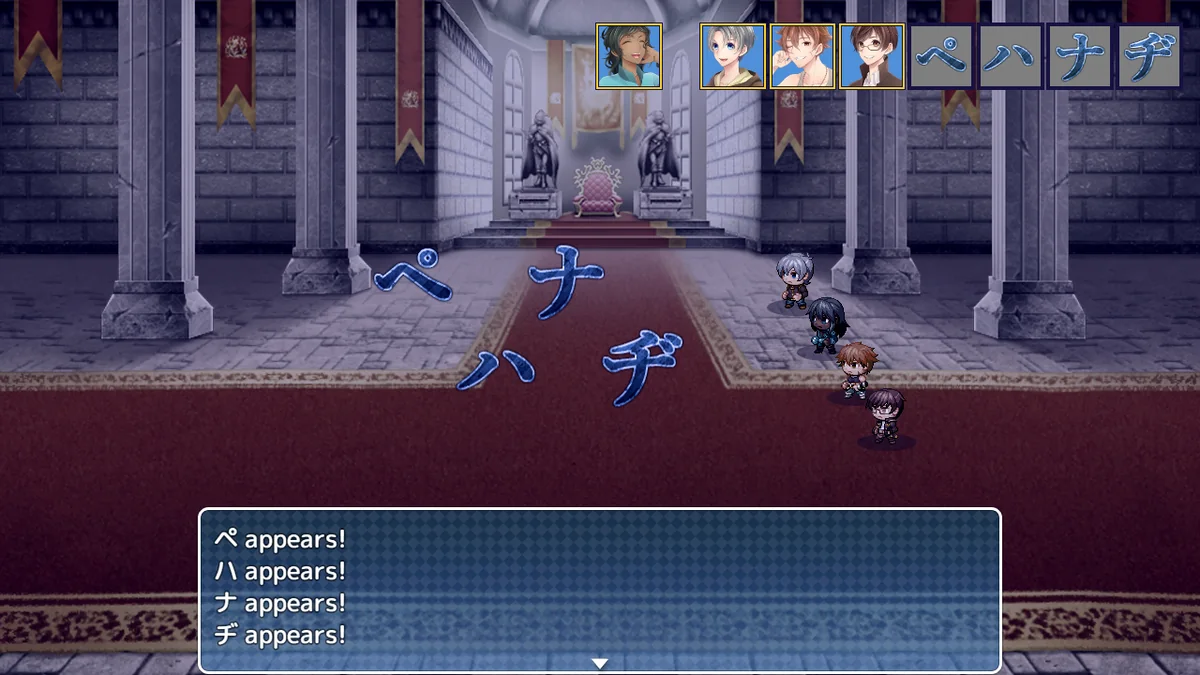
| Vocab & Grammar2Reading4Listening2Speaking0Self-Reliance0 | One of the few games focused almost entirely on katakana. Best played after Hiragana Battle — reviewers are unanimous that the order matters. | Basic words, grammar not explained | Teaches katakana from zero | None | You pick, in battle | Partly voiced, out of sync | No microphone | English and furigana throughout |
Influent
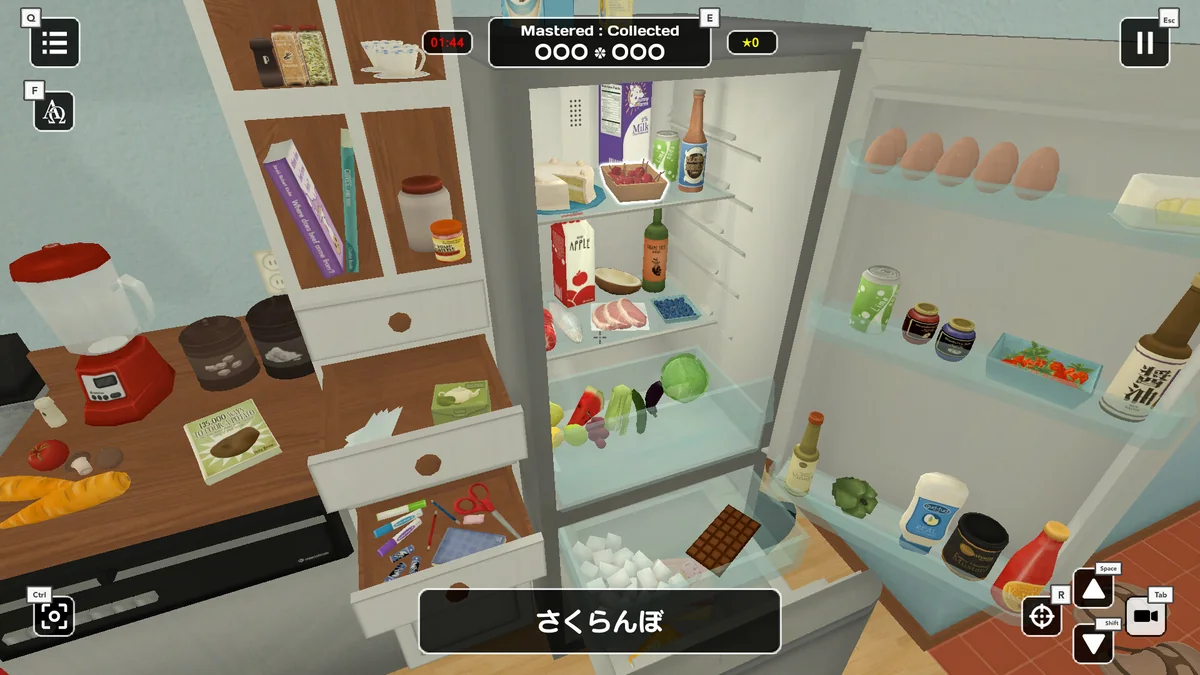
| Vocab & Grammar3Reading1Listening3Speaking0Self-Reliance0 | Learn 400+ words by exploring a 3D apartment. Good for object vocabulary; weak for sentences and grammar, and it now feels dated. | 400+ nouns, no grammar | Expects you to know kana | None | You click the object | Native voices, single words only | No microphone | Phonetic transcriptions, no furigana |
Japanese with Mayu
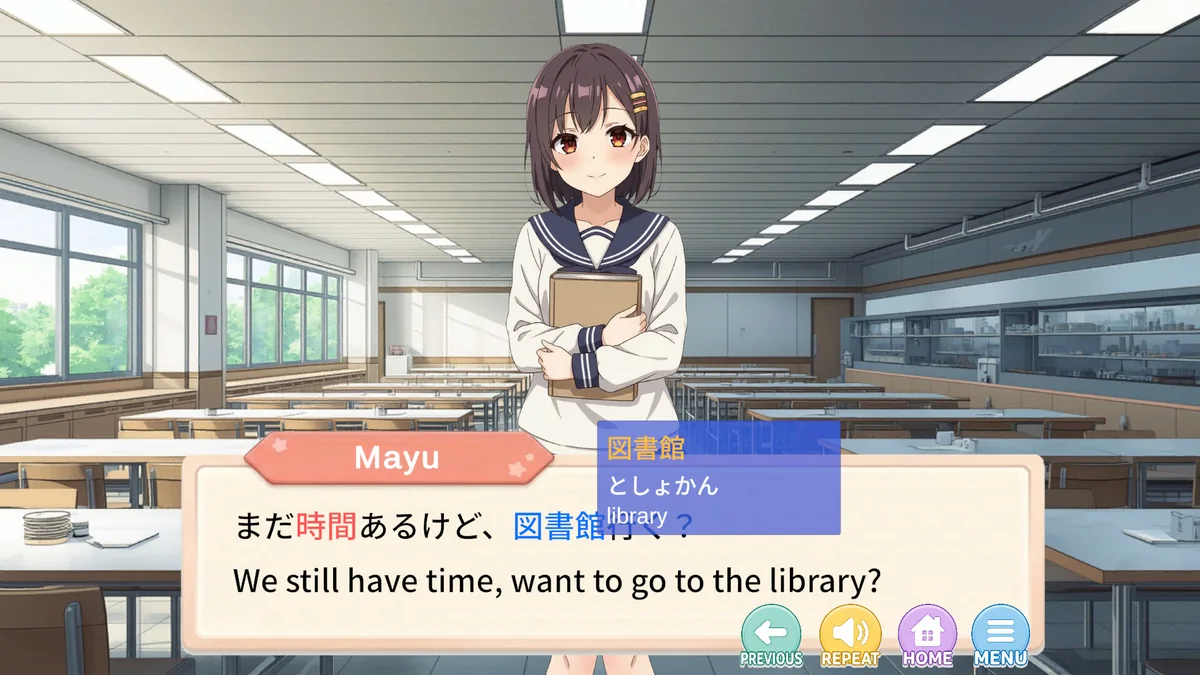
| Vocab & Grammar2Reading3Listening2Speaking0Self-Reliance0 | A short, fully voiced visual novel with a hover dictionary, for $2.99. About an hour of content, and it carries an AI-content disclosure. | About an hour of vocabulary, no grammar | Expects you to know kana | In the text, with hover readings | Never tests you | Voiced dialogue, AI disclosure on store page | No microphone | Hover dictionary and English subtitles |
You Can Kana
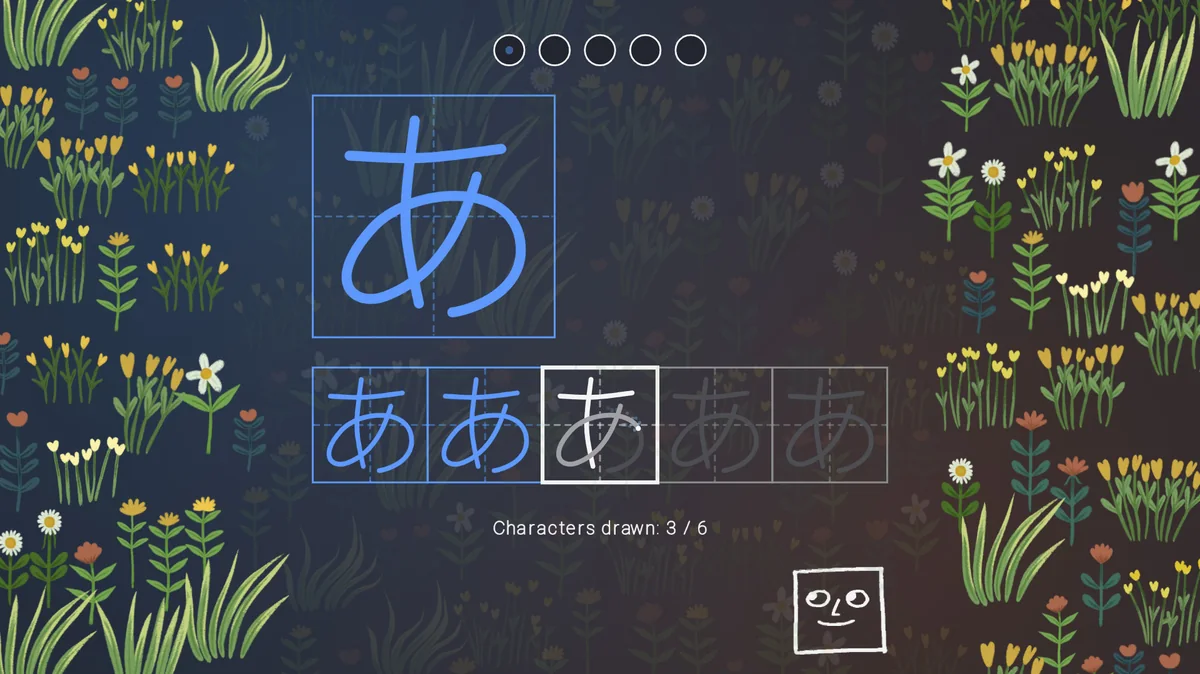
| Vocab & Grammar1Reading4Listening1Speaking0Self-Reliance0 | One of the strongest pure kana drills here. More study tool than game, and it doesn't teach stroke order. | Kana only, no words or grammar | Teaches, but no stroke order | None | You type the kana | Single characters only | No microphone | Romaji input — you can answer without reading kana |
Terra Alia
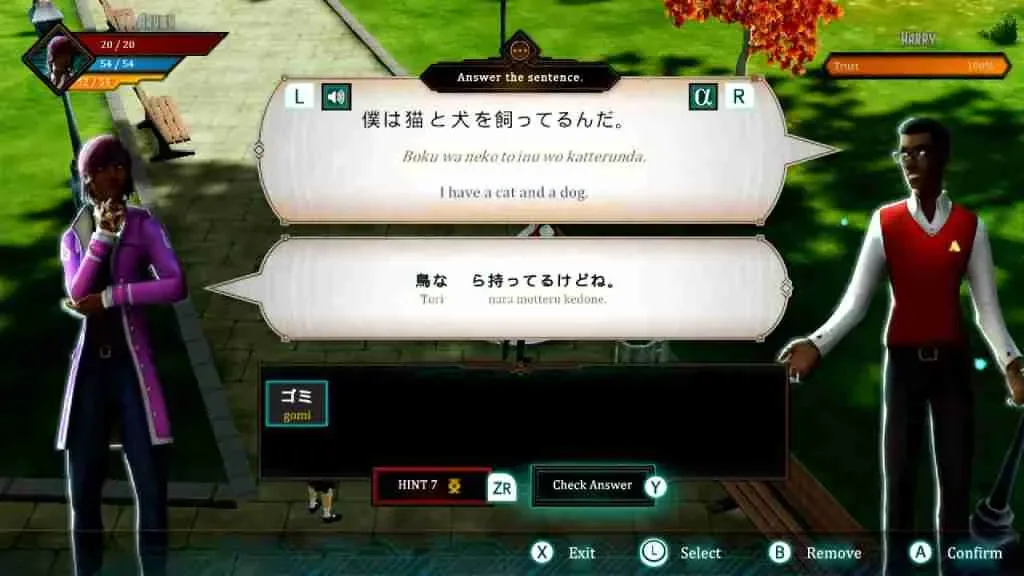
| Vocab & Grammar2Reading0Listening2Speaking2Self-Reliance0 | Pronunciation powers your spells, which is a clever mechanic. But most practice is repeating single words, and Steam reviews are mixed. | Single words, no grammar | Expects you to know kana | None | You say the word | Voiced in both languages | Listens to you, single words | No reading help |
Kana Quest
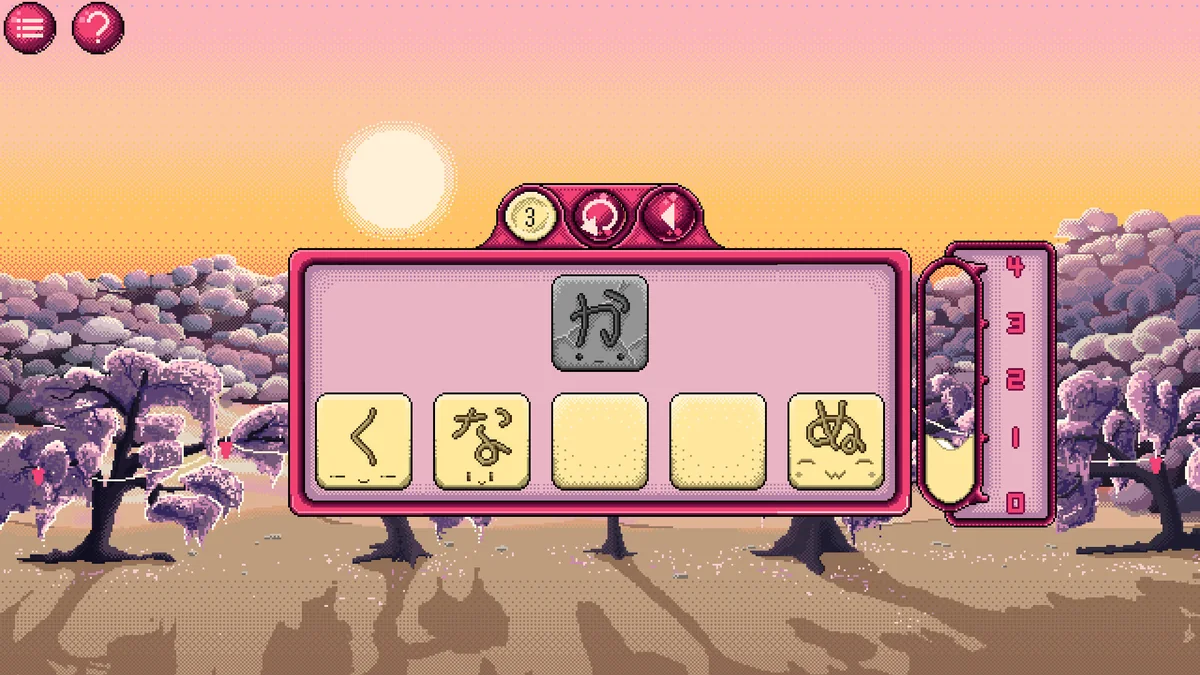
| Vocab & Grammar0Reading3Listening1Speaking0Self-Reliance0 | A clever sound-matching puzzle. Better for seeing how kana sounds connect than for learning to read kana fluently. | Kana only, no words or grammar | Sound patterns, not reading fluency | None | You match by sound | Kana sounds only | No microphone | Not verified |
Lost Abroad Café
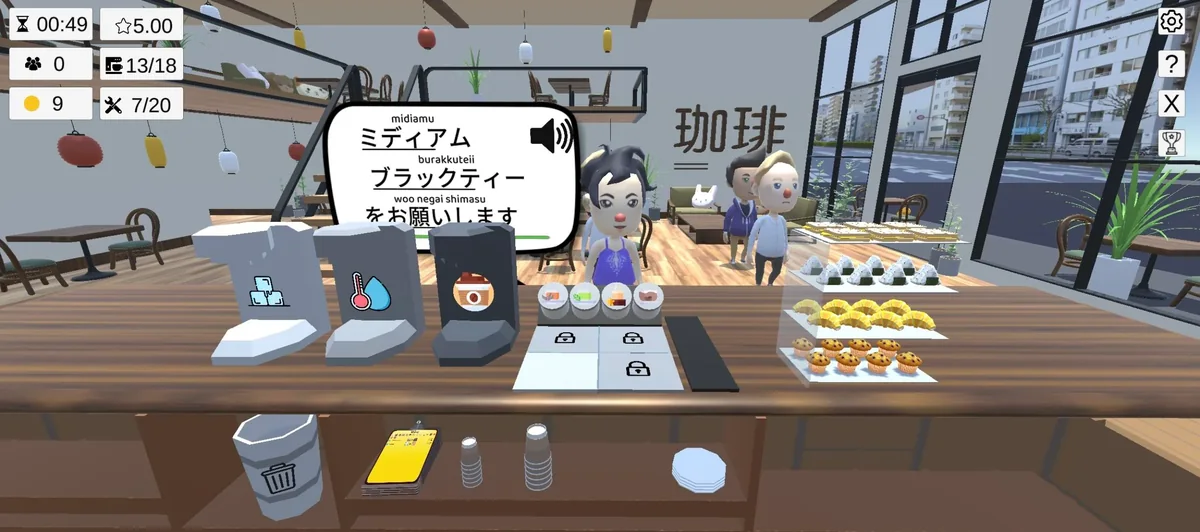
| Vocab & Grammar1Reading1Listening1Speaking0Self-Reliance0 | A café management sim built around service Japanese. A genuinely good idea, but bare-bones and the buggiest game in this list. | A handful of drinks, no grammar | Expects you to know kana | None taught | You serve what you hear | Robot voice, developer-confirmed | No microphone | Click any word for its meaning |
Hiragana Pixel Party
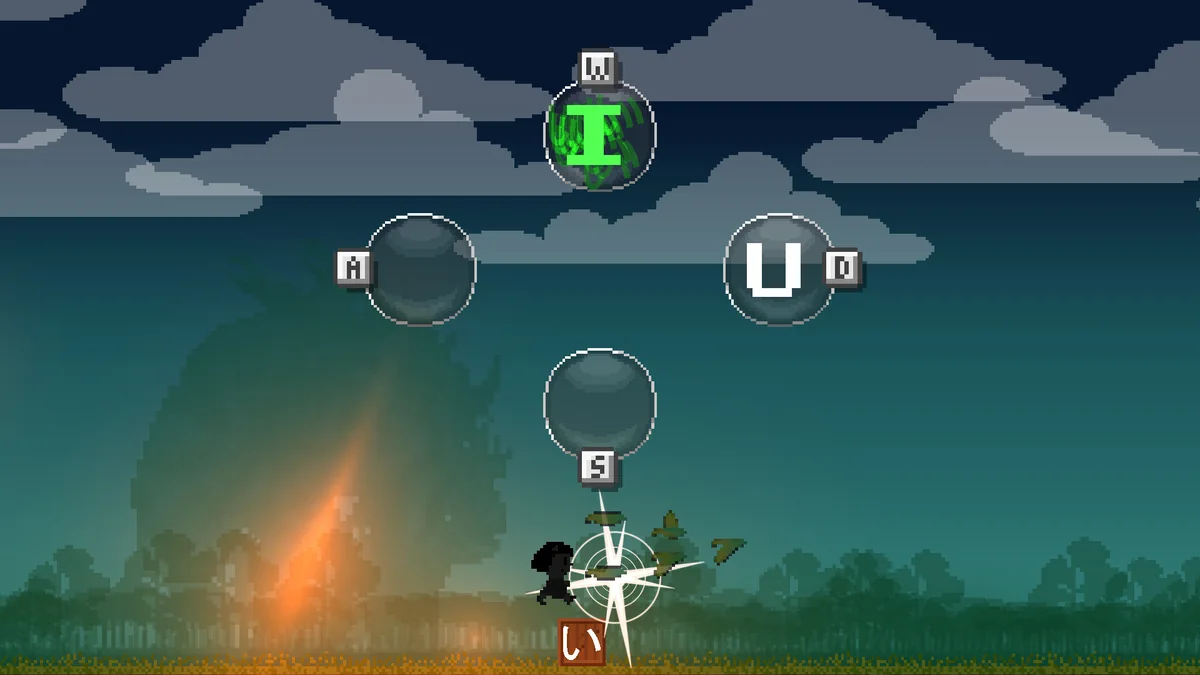
| Vocab & Grammar0Reading2Listening1Speaking0Self-Reliance0 | A rhythm game that tests how quickly you recognize kana. Better for revision than for learning from zero. | Kana only, no words or grammar | Tests kana, doesn't teach it | None | You hit the beat | Single characters only | No microphone | Not verified |
C Rank — Intermediate Gaijin
Self-Reliance is still a bonus here.
| Game | Stats | Our verdict | Words & grammar | Kana | Kanji | How you answer | Audio | Speaking | Support |
|---|---|---|---|---|---|---|---|---|---|
Gaijin Mode
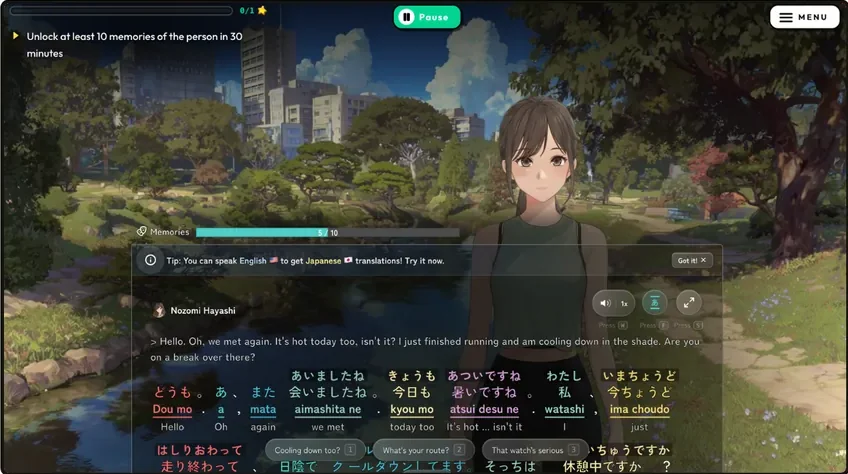
| Vocab & Grammar3Reading2Listening4Speaking5Self-Reliance3 | Best for unscripted speaking practice. The only game here that answers back in your own words. It's ours, and it has no player reviews yet. | Grammar in conversation, never explained | Expects you to know kana | Not taught | You say it out loud, in your own words | Native voices, live conversation | Listens to you, unscripted | English lifeline you can switch off |
Shujinkou
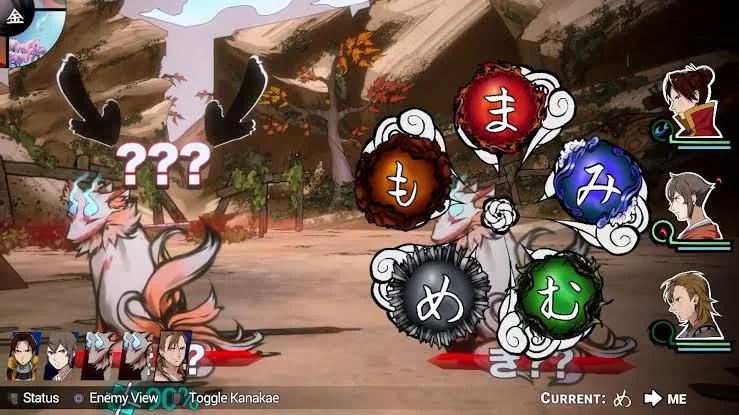
| Vocab & Grammar5Reading5Listening4Speaking0Self-Reliance2 | Best for vocab and grammar at scale, inside a real JRPG. The most expensive game we recommend, and the learning is optional. | Thousands of words, 100+ grammar points | Teaches all kana | Hundreds, taught in-game | You pick from options | Native voices, 700+ lines | No microphone | Furigana always on |
Kagami
| Vocab & Grammar3Reading3Listening4Speaking0Self-Reliance4 | Native audio with no romaji anywhere, so you meet Japanese as Japanese from minute one. Short, and only fourteen reviews. | Short campaign, under what C rank needs | Expects you to know kana | Some, picked up from context | You play mini-games | Native voices, scene dialogue | No microphone | No romaji anywhere |
So to Speak
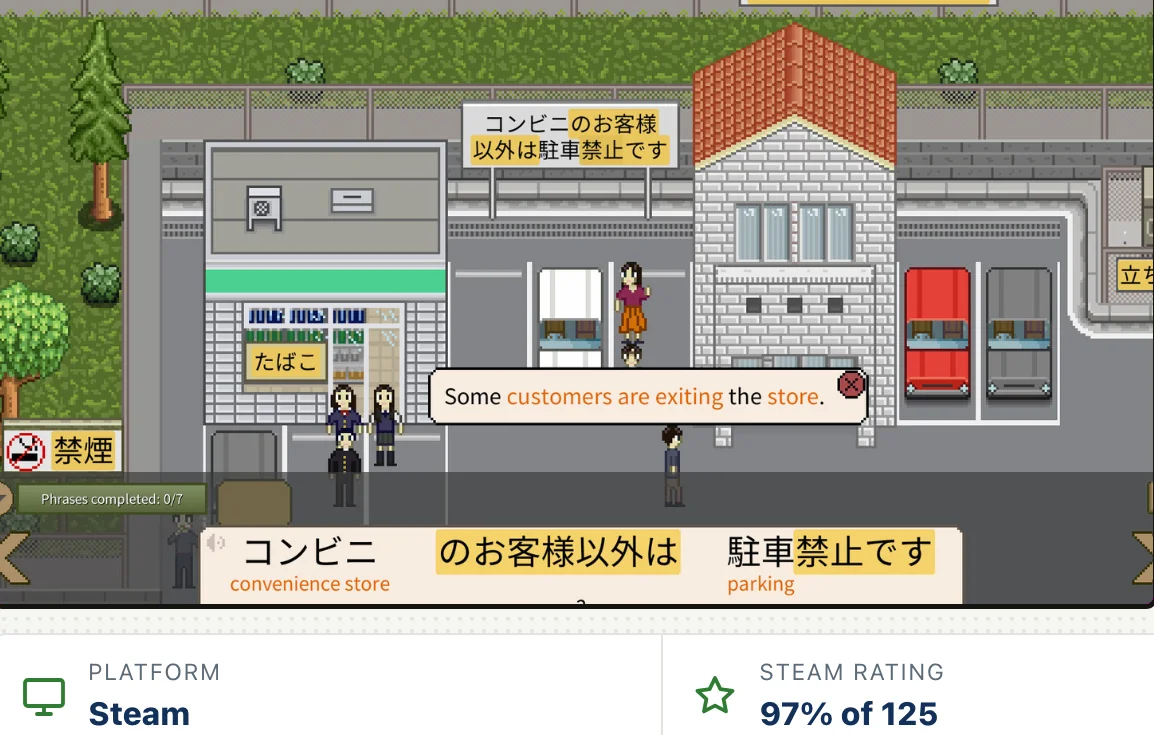
| Vocab & Grammar3Reading4Listening0Speaking0Self-Reliance4 | The best-loved game here, and the only one where guessing from context is the whole mechanic. Its scope sits closer to N5 than to C Rank. | ~650 words — C rank needs 1,000+ | Expects you to know kana | Some, picked up from context | You drag words onto pictures | No voice acting | No microphone | No translations — you work it out |
WonderLang
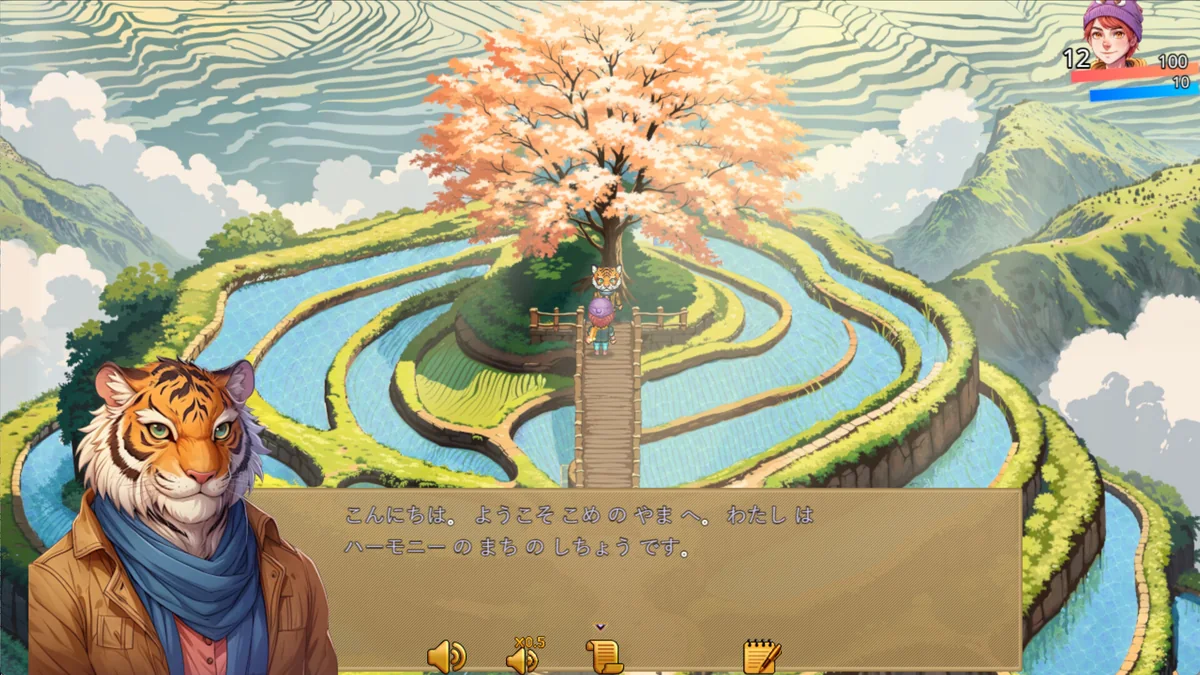
| Vocab & Grammar3Reading3Listening2Speaking2Self-Reliance1 | Speech-recognition drills inside an RPG, with the most configurable script display here. Its reception has turned around, but a third of reviewers still report bugs. | Some grammar explained, word count unclear | Teaches kana, skippable if you know it | Top 110, furigana optional | You speak or pick, in combat | Synthetic voice, often wrong | Speech recognition, widely criticised | Romaji, kana or kanji — your choice |
Kanji Cats
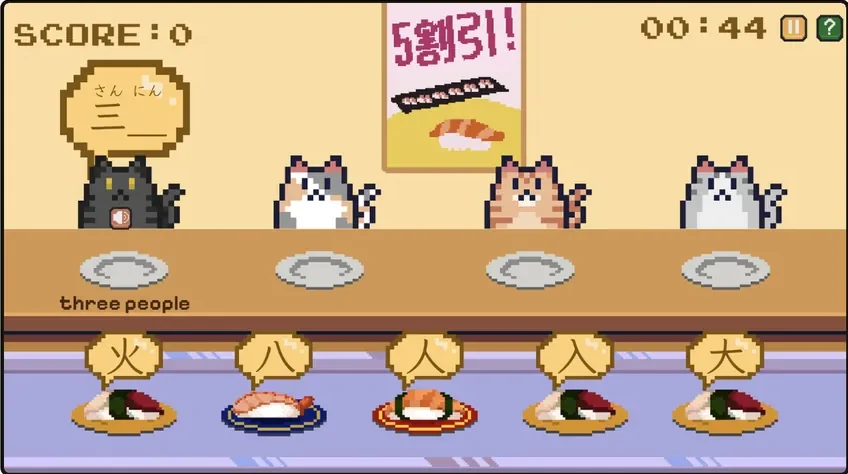
| Vocab & Grammar4Reading5Listening1Speaking0Self-Reliance1 | The sharpest kanji drill here — it makes you type the reading instead of picking it. Under ten reviews, so buy on the demo. | N5–N1 readings, no grammar | Expects you to know kana | N5–N1, filter by level or topic | You type the reading | Not verified | No microphone | No reading help at all |
LJTS: Kanji Combat
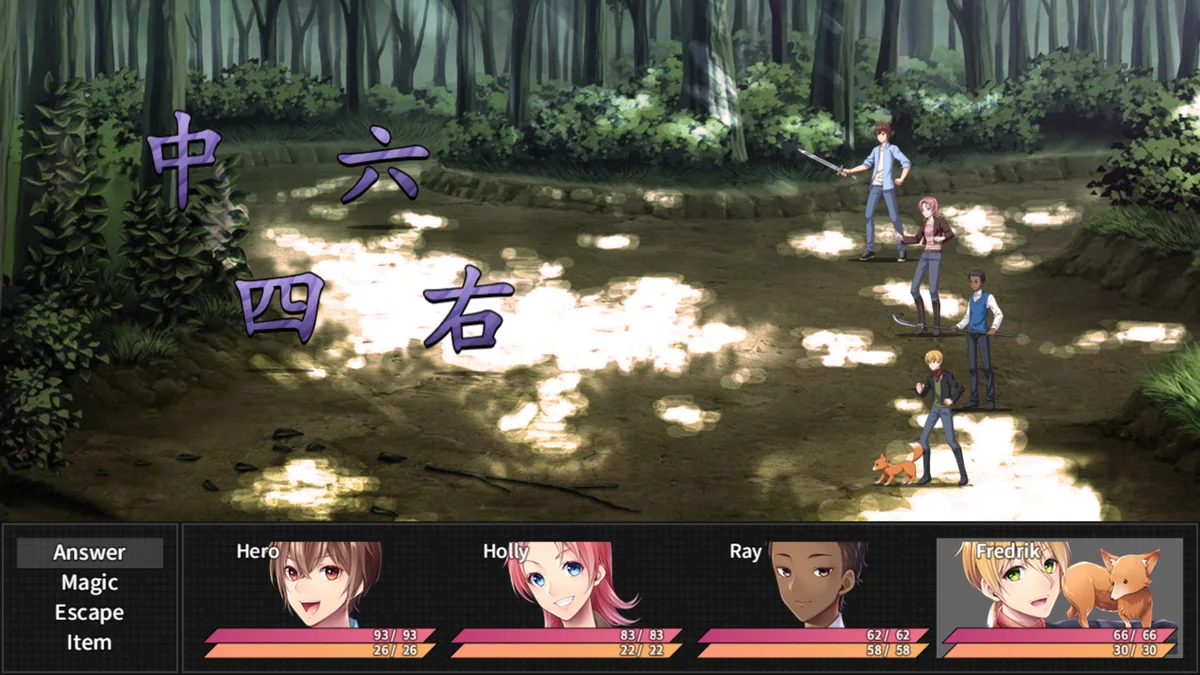
| Vocab & Grammar2Reading3Listening2Speaking0Self-Reliance1 | The third LJTS game fixes some of the earlier grind, but testing is multiple-choice only and it's been abandoned since 2019. | 200 kanji, grammar not explained | Expects you to know kana | 200, tested by multiple choice | You pick from four — reviewers memorise the positions | Voiced, best of the trilogy | No microphone | English throughout |
A & S Rank
No language-first game serves these ranks. This section gets updated when that changes.