How to Speak Japanese for Beginners: Where to Start
By  Maki Kinashi&
 Tomoko NagaiUpdated
Throughout Maki's years of teaching Japanese, she's noticed something consistent: the students who become fluent the fastest are rarely the ones who memorize grammar textbooks cover to cover. Instead, they're the ones who start speaking simple phrases like すごいですね!(sugoi desu ne, that’s amazing!) from the beginning, and only picking up vocabulary and grammar naturally through practicing out loud.
This is the first article in our How to Speak Japanese series, written by two native Japanese speakers, Maki and Tomoko, to help English speakers get started on the right note with speaking Japanese. And we promise, it may not be as difficult as you think!
Our approach starts with the Japanese you already secretly possess, then teaches you how to make the right Japanese sounds early on, and ends with ways to build your confidence through simple, everyday conversations. This guide gives you practical shortcuts to the essential skills you need to start speaking Japanese. Each skill has its own deep-dive in the series, so you can explore it further whenever you're ready.
1. You're not actually starting Japanese from zero
Kōhī. Terebi. Hoteru. If you can guess what these mean, congratulations! You already know some Japanese!
There are so many English words in Japanese
Coffee, TV, and hotel. You probably guessed them right away because they're borrowed from English. These are examples of 外来語 (gairaigo), aka loanwords: words borrowed from other languages and adapted to Japanese pronunciation through a few simple rules:
| Rule | English | Japanese |
|---|---|---|
| Add a vowel after a consonant | milk | ミルク miruku |
| l changes to r | hotel | ホテル hoteru |
| v changes to b | video | ビデオ bideo |
| Long words get shorter | smartphone | スマホ sumaho |
If you listen closely, you'll notice their sounds change slightly in Japanese. Explore more of these loanwords in our interactive list below. You can filter words by how useful they are in everyday conversations:
Top 150 Most Useful Loanwords
| Japanese | Listen | Meaning |
|---|---|---|
| スマホsumaho | smartphone | |
| テレビterebi | TV | |
| パソコンpasokon | PC | |
| トイレtoire | toilet | |
| レストランresutoran | restaurant | |
| コンビニkonbini | convenience store | |
| メニューmenyū | menu | |
| エアコンeakon | air conditioner | |
| バスbasu | bus | |
| ネットnetto | internet | |
| アプリapuri | app | |
| スーパーsūpā | supermarket | |
| タクシーtakushī | taxi | |
| サイトsaito | website | |
| カレーkarē | curry | |
| メールmēru | ||
| ホテルhoteru | hotel | |
| サラダsarada | salad | |
| チケットchiketto | ticket | |
| ゲームgēmu | game | |
| グループgurūpu | group | |
| ストレスsutoresu | stress | |
| テーブルtēburu | table | |
| ポイントpointo | point | |
| タイプtaipu | type | |
| ベッドbeddo | bed | |
| イメージimēji | image | |
| ドアdoa | door | |
| チームchīmu | team | |
| シャワーshawā | shower | |
| カードkādo | card | |
| スケジュールsukejūru | schedule | |
| コンピューターkonpyūtā | computer | |
| タオルtaoru | towel | |
| インターネットintānetto | internet | |
| ティッシュtisshu | tissue | |
| ケーキkēki | cake | |
| アニメanime | anime | |
| キッチンkitchin | kitchen | |
| ミーティングmītingu | meeting | |
| ウェブwebu | web | |
| リビングribingu | living room | |
| ハンバーガーhanbāgā | hamburger | |
| プロジェクトpurojekuto | project | |
| サンドイッチsandoitchi | sandwich | |
| ホームページhōmupēji | website | |
| リモコンrimokon | remote control | |
| ブラウザburauza | web browser | |
| スープsūpu | soup | |
| トラックtorakku | truck | |
| ソファsofa | sofa | |
| ソフトsofuto | software | |
| カーテンkāten | curtain | |
| スタッフsutaffu | staff | |
| ライスraisu | rice | |
| ソフトウェアsofutowea | software | |
| レンタカーrentakā | rental car | |
| ランプranpu | lamp | |
| メンバーmenbā | member | |
| ステーキsutēki | steak | |
| ハードhādo | hardware | |
| レンタルrentaru | rental | |
| ライトraito | light | |
| チキンchikin | chicken | |
| デパートdepāto | department store | |
| ハードウェアhādowea | hardware | |
| スイッチsuitchi | switch | |
| ビーフbīfu | beef | |
| ショップshoppu | shop | |
| ニュースnyūsu | news | |
| デートdēto | date | |
| カレンダーkarendā | calendar | |
| ポークpōku | pork | |
| ストアsutoa | store | |
| メッセージmessēji | message | |
| ロビーrobī | lobby | |
| カップルkappuru | couple | |
| ボックスbokkusu | box | |
| ハムhamu | ham | |
| セールsēru | sale | |
| サービスsābisu | service | |
| チャットchatto | chat | |
| ケースkēsu | case | |
| ソーセージsōsēji | sausage | |
| バーゲンbāgen | bargain sale | |
| アカウントakaunto | account | |
| チェックインchekkuin | check-in | |
| パーティーpātī | party | |
| カップkappu | cup | |
| ベーコンbēkon | bacon | |
| プライスpuraisu | price | |
| スポーツsupōtsu | sports | |
| パスワードpasuwādo | password | |
| チェックアウトchekkuauto | check-out | |
| サプライズsapuraizu | surprise | |
| グラスgurasu | drinking glass | |
| チーズchīzu | cheese | |
| レジreji | checkout | |
| ログインroguin | login | |
| パスポートpasupōto | passport | |
| プレートpurēto | plate | |
| バターbatā | butter | |
| レシートreshīto | receipt | |
| ログアウトroguauto | logout | |
| スーツケースsūtsukēsu | suitcase | |
| フォークfōku | fork | |
| ヨーグルトyōguruto | yogurt | |
| クレジットカードkurejittokādo | credit card | |
| ダウンロードdaunrōdo | download | |
| ツアーtsuā | tour | |
| タイミングtaimingu | timing | |
| ナイフnaifu | knife | |
| ミルクmiruku | milk | |
| キャッシュkyasshu | cash | |
| アップロードappurōdo | upload | |
| ガイドgaido | guide | |
| プレイヤーpureiyā | player | |
| スプーンsupūn | spoon | |
| クリームkurīmu | cream | |
| キャンセルkyanseru | cancel | |
| アップデートappudēto | update | |
| マップmappu | map | |
| ショックshokku | shock | |
| キャラクターkyarakutā | character | |
| ボトルbotoru | bottle | |
| アイスクリームaisukurīmu | ice cream | |
| クーポンkūpon | coupon | |
| インストールinsutōru | install | |
| ファンfan | fan (supporter) | |
| ルートrūto | route | |
| ジュースjūsu | juice | |
| ハッピーhappī | happy | |
| ストーリーsutōrī | story | |
| バッグbaggu | bag | |
| ギフトgifuto | gift | |
| オフィスofisu | office | |
| ファイルfairu | file | |
| フライトfuraito | flight | |
| ラッキーrakkī | lucky | |
| シーンshīn | scene | |
| ポケットpoketto | ||
| イベントibento | event | |
| プレゼントpurezento | present | |
| フォルダーforudā | folder | |
| ターミナルtāminaru | terminal | |
| クールkūru | cool | |
| エピソードepisōdo | episode | |
| クッキーkukkī | cookie | |
| アクセスakusesu | access | |
| パッケージpakkēji | packaging |
Note: Not every loanword translates directly. There are exceptions called 和製英語 (wasei eigo, Japanese-made English), in which over time, some words drift from their original meanings. For example, many of us native Japanese grew up thinking マンション (manshon) meant an apartment, not a big luxury house.
Go deeper →Learn more in-depth about the rules and patterns of loanwords as well as the nuances in Japanese vocabulary in our English words in Japanese guide.
2. Get Japanese pronunciation right first
Even if your grammar is a little off, Japanese people can usually guess what you’re trying to say. But get the sounds, beats or long vowels wrong, and you might get yourself in a funny situation.
Unique Japanese sounds hidden in familiar English words
English and Japanese use the tongue and lips differently. English sounds like R, F, and SH involve more noticeable movements, while their Japanese counterparts are often lighter and subtler. Here's a quick guide to adjusting sounds you already know to make your Japanese pronunciation more natural:
| Japanese sound | Listen | Closest English cue | Examples |
|---|---|---|---|
| Japanese Rらraりriるruれreろro | The quick "tt/dd" in American English: a light tap of the tongue behind the top teethExamples: butter, ladder, water | butter, ladder, water | |
| つtsu | The "ts" at the end of cats, moved to the start of a syllableExamples: cats, boots | cats, boots | |
| ちchi | Close to "ch", made slightly further forwardExamples: cheese, cheap | cheese, cheap | |
| しshi | Close to "sh", made slightly further forwardExamples: she, sheep | she, sheep | |
| じji | Close to English "j", made slightly further forwardExamples: jeep, jeans | jeep, jeans | |
| ふfu | Between "f" and "h": blow gently through slightly rounded lips, teeth not touching the lipExamples: who | who | |
| ひhi | Close to the start of huge or HughExamples: huge | huge | |
| んbefore k / g | The "ng" in singExamples: sing, think | sing, think | |
| んbefore m / b / p | An "m" soundExamples: sympathy, impossible | sympathy, impossible | |
| んbefore t / d / n | An "n" soundExamples: ten, winter | ten, winter | |
| っsmall tsu | A held consonant, like the pause in book keeper. It changes meaning: おと (oto, "sound") vs おっと (otto, "husband")Examples: book keeper, hot tea | book keeper, hot tea |
Get your rhythm right: Mora rhythm vs Stress rhythm
English relies on stressing its syllables and rhythm, whereas Japanese is spoken in evenly timed beats called mora, or 拍 (haku) in Japanese. Think of a mora as roughly one steady clap per beat.
For example, ビル (biru, building) has two beats while ビール (bīru, beer) has three. Omit that extra "i" vowel & beat, and you might end up ordering ビルをください (biru o kudasai, “A building, please”) from a bartender! So unless you'd rather order a building than a beer at an izakaya, pay attention to the beats.
| Word | Listen | Beats | No. of beats |
|---|---|---|---|
| ビル birubuilding | ビbi・ルru | 2 | |
| ビール bīrubeer | ビbi・ーi・ルru | 3 | |
| おばさん obasanaunt | おo・ばba・さsa・んn | 4 | |
| おばあさん obāsangrandmother | おo・ばba・あa・さsa・んn | 5 |
Getting your rhythm right is important because an extra or missing beat can change a word's meaning entirely. Get it wrong, and you might end up calling your aunt “grandma”!
The highs and lows of the Japanese Pitch Accent
When you hear “ame,” is it rain or candy? The difference is pitch accent. 雨 (ame, rain) starts high and drops, while 飴 (ame, candy) starts low and rises. In Japanese, each beat (mora) has a high or low pitch, and the pattern can change a word's meaning.
Practice with the cards below and listen for where the pitch goes high or low.
Same sounds, different pitch
Both said あめ (ame)
雨
amerain
飴
amecandy
Both said さけ (sake)
鮭
sakesalmon
酒
sakealcohol
Both said きる (kiru)
切る
kiruto cut
着る
kiruto wear
Both said かえる (kaeru)
帰る
kaeruto go home
変える
kaeruto change
Both said はし (hashi)
箸
hashichopsticks
橋
hashibridge
Both said かみ (kami)
神
kamigod
紙
kamipaper
Both said かき (kaki)
牡蠣
kakioyster
柿
kakipersimmon
Both said いま (ima)
今
imanow
居間
imaliving room
Both said あき (aki)
秋
akiautumn
空き
akivacancy
Both said ふる (furu)
降る
furuto fall (rain)
振る
furuto wave
Go deeper →These are enough for you to keep going. However, if you are interested in truly mastering Japanese sounds, check out our Japanese pronunciation for speaking guide.
3. Cheat codes to start speaking your first Japanese sentences
Like cheat codes in a game, we introduce three shortcuts that let you skip ahead and start speaking sooner: sentence frames, 相槌 (aizuchi, reaction sentences), and a simple rule for politeness.
Think in Sentence Frames, they'll save your life
Sentence frames are smart shortcuts that let you build Japanese sentences without learning complex grammar rules first. Here's a simple equation for you to remember:
- Wordラーメン (rāmen): ramen
- Sentence FRAMEXが好きです (X ga suki desu): I like X.
- FULL Sentenceラーメンが好きです (rāmen ga suki desu): I like ramen.
Now swap X with words you already know, including the hundreds of useful loanwords we just taught, and you can build countless conversation-ready Japanese sentences! The frame handles the grammar (for now), so you can focus on what you want to say.
Here's a list of the most useful sentence frames that work in everyday situations:
Useful Sentence Frames in Japanese
Swap any word into the X.
| # | Sentence frame | Listen | Example |
|---|---|---|---|
| 1 | 私は X ですWatashi wa X desuI'm X | 私は学生です。Watashi wa gakusei desu.I'm a student. | |
| 2 | X が好きですX ga suki desuI like X | ラーメンが好きです。Rāmen ga suki desu.I like ramen. | |
| 3 | X をお願いしますX o onegaishimasuX, please | コーヒーをお願いします。Kōhī o onegaishimasu.Coffee, please. | |
| 4 | X はどこですか?X wa doko desu ka?Where is X? | トイレはどこですか?Toire wa doko desu ka?Where's the toilet? | |
| 5 | X はありますか?X wa arimasu ka?Is there X? / Do you have X? | Wi-Fiはありますか?Wai-fai wa arimasu ka?Is there Wi-Fi? | |
| 6 | X に行きますX ni ikimasuI'm going to X | 日本に行きます。Nihon ni ikimasu.I'm going to Japan. | |
| 7 | X は何ですか?X wa nan desu ka?What is X? | これは何ですか?Kore wa nan desu ka?What's this? | |
| 8 | X (verb)てくださいX (verb) te kudasaiPlease do X | ゆっくり話してください。Yukkuri hanashite kudasai.Please speak slowly. | |
| 9 | X をくださいX o kudasaiPlease give me X | 水をください。Mizu o kudasai.Water, please. | |
| 10 | X がありますX ga arimasuI have X / There is X | 時間があります。Jikan ga arimasu.I have time. | |
| 11 | X がありませんX ga arimasenI don't have X / There isn't X | 時間がありません。Jikan ga arimasen.I don't have time. | |
| 12 | X はいくらですか?X wa ikura desu ka?How much is X? | これはいくらですか?Kore wa ikura desu ka?How much is this? | |
| 13 | X を探していますX o sagashite imasuI'm looking for X | 駅を探しています。Eki o sagashite imasu.I'm looking for the station. | |
| 14 | X がわかりますX ga wakarimasuI understand X | 日本語が少しわかります。Nihongo ga sukoshi wakarimasu.I understand a little Japanese. | |
| 15 | X ができますX ga dekimasuI can do X | 料理ができます。Ryōri ga dekimasu.I can cook. | |
| 16 | [Place]に X があります[Place] ni X ga arimasuThere is X at [place] | 近くにコンビニがあります。Chikaku ni konbini ga arimasu.There's a convenience store nearby. | |
| 17 | [Place]に X がいます[Place] ni X ga imasuThere's a person/animal at [place] | ここに猫がいます。Koko ni neko ga imasu.There's a cat here. | |
| 18 | X が必要ですX ga hitsuyō desuI need X | パスポートが必要です。Pasupōto ga hitsuyō desu.I need a passport. | |
| 19 | X は日本語で何と言いますか?X wa nihongo de nan to iimasu ka?How do you say X in Japanese? | 「dog」は日本語で何と言いますか?"Dog" wa nihongo de nan to iimasu ka?How do you say "dog" in Japanese? | |
| 20 | X はどういう意味ですか?X wa dō iu imi desu ka?What does X mean? | 「もったいない」はどういう意味ですか?"Mottainai" wa dō iu imi desu ka?What does "mottainai" mean? |
Learn Reaction Sentences that move conversations along
Conversations are half about what you say, and half about how you react and listen. In fact, us Japanese even have an official name for it: 相槌 (aizuchi), active listening cues which are the “like” buttons of a conversation. They tell the speaker, “I'm listening.”
Even はい (hai) often means “I’m listening” rather than “I agree”. Learning aizuchi sentences early on is important because in Japanese culture, staying completely silent can make the other person wonder if you're paying attention, and may even come across as rude.
Here are some useful reactions you can start using, even as a beginner:
Top Reactions in Japanese
| # | Japanese | Listen | Meaning |
|---|---|---|---|
| 1 | そうなんですねSō nan desu ne | Oh, I see! | |
| 2 | そうですかSō desu ka | I see / Is that so? | |
| 3 | なるほどNaruhodo | Ah, that makes sense! | |
| 4 | そうだったんですねSō dattan desu ne | Oh, so that's what happened! | |
| 5 | うんうんUn un | Uh-huh, mm-hmm (casual) | |
| 6 | えっ!E! | Huh?! / What?! | |
| 7 | 本当ですか?Hontō desu ka? | Really?! | |
| 8 | すごいですね!Sugoi desu ne! | That's amazing! | |
| 9 | びっくりしました!Bikkuri shimashita! | That surprised me! | |
| 10 | やばい!Yabai! | That's crazy! / Oh no! (casual slang; context-dependent) | |
| 11 | そうですねSō desu ne | That's true / Yeah, I agree | |
| 12 | 確かにTashika ni | True! / Good point! | |
| 13 | 私もそう思いますWatashi mo sō omoimasu | I think so too | |
| 14 | いいですね!Ii desu ne! | That sounds good! | |
| 15 | 私はちょっと違うと思いますWatashi wa chotto chigau to omoimasu | I see it a little differently | |
| 16 | それで、どうなりましたか?Sore de, dō narimashita ka? | And what happened next? | |
| 17 | どうでしたか?Dō deshita ka? | How was it? | |
| 18 | XXさんは?XX-san wa? | How about you, [name]? | |
| 19 | どう思いますか?Dō omoimasu ka? | What do you think? | |
| 20 | もう少し教えてくださいMō sukoshi oshiete kudasai | Tell me a little more |
When in doubt, use polite Japanese
敬語 (keigo, polite Japanese) can feel intimidating, but beginners can start with choosing to use these two polite cheat codes as default: です (desu) and ます (masu).
Use です (desu) and ます (masu) with shop staff, people you’ve just met, and anyone older than you. Once you become closer, you can switch to casual Japanese. For example, 食べます (tabemasu) becomes 食べる (taberu). Both mean “eat,” but the first is polite and the second is casual.
Go deeper →Build on these cheat codes with our more in-depth Japanese sentence structure for speaking, Common Japanese words & phrases for conversations and Keigo for Beginners: Polite vs casual Japanese guides.
4. Recommended resources to practice speaking Japanese
The best way to get comfortable speaking Japanese is to practice regularly. Here are some resources we recommend, whether you prefer learning through videos, conversations, or games.
4.1 Creator channels
Miku Real Japanese

Explains Japanese clearly in English. Her Conversations series are good for picking up natural listening.
Japanese with Shun
Teaches Japanese entirely in Japanese with slower-paced speech. Great for listening without English explanations.
4.2 Speaking practice
Tutors


Practice unscripted conversations with Japanese teachers who can correct you in real time. Great for personalized feedback, but daily lessons can get expensive.
Language exchange


You and a Japanese speaker help each other learn your languages. Tomoko has tried this herself, but finding a reliable partner takes time, and you won't always get enough speaking practice.
AI speaking tools


Practice speaking anytime without feeling shy. Many offer corrections and guidance, making them useful for building confidence before talking with Japanese people.
4.3 Voice-controlled language games
Gaijin Mode
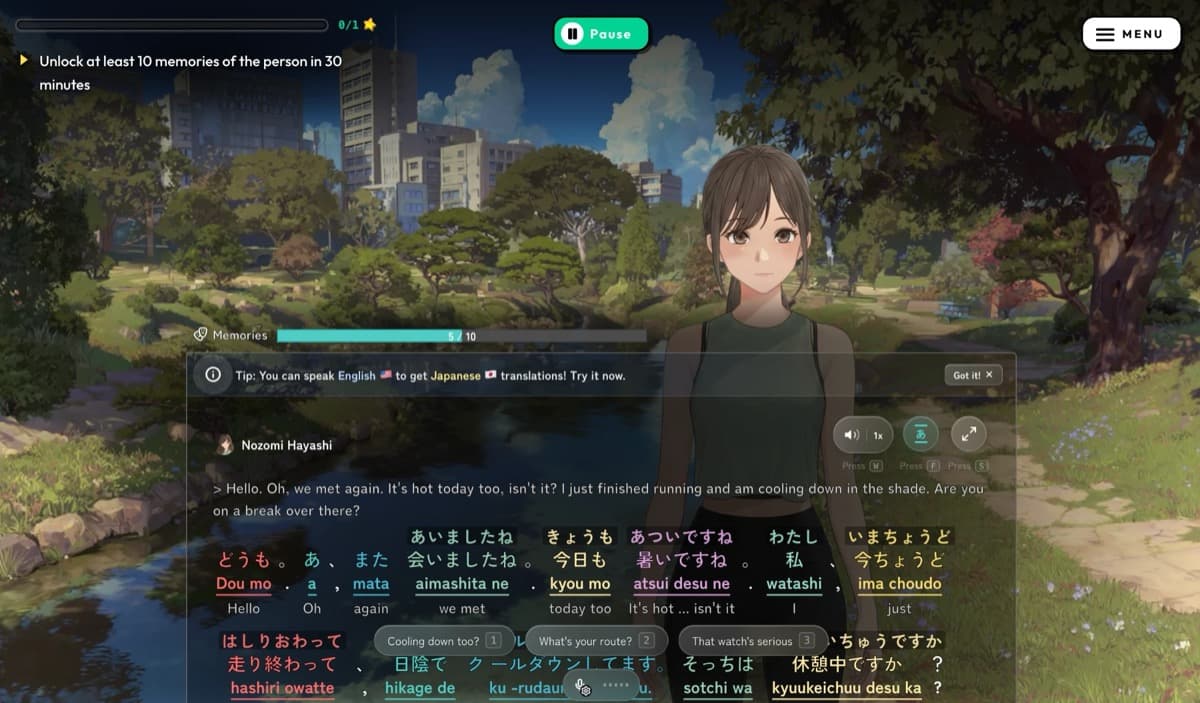
Speak with AI characters through interactive stories, free-form conversations, and shared memories. Good for practicing how to respond in conversations.
Noun Town
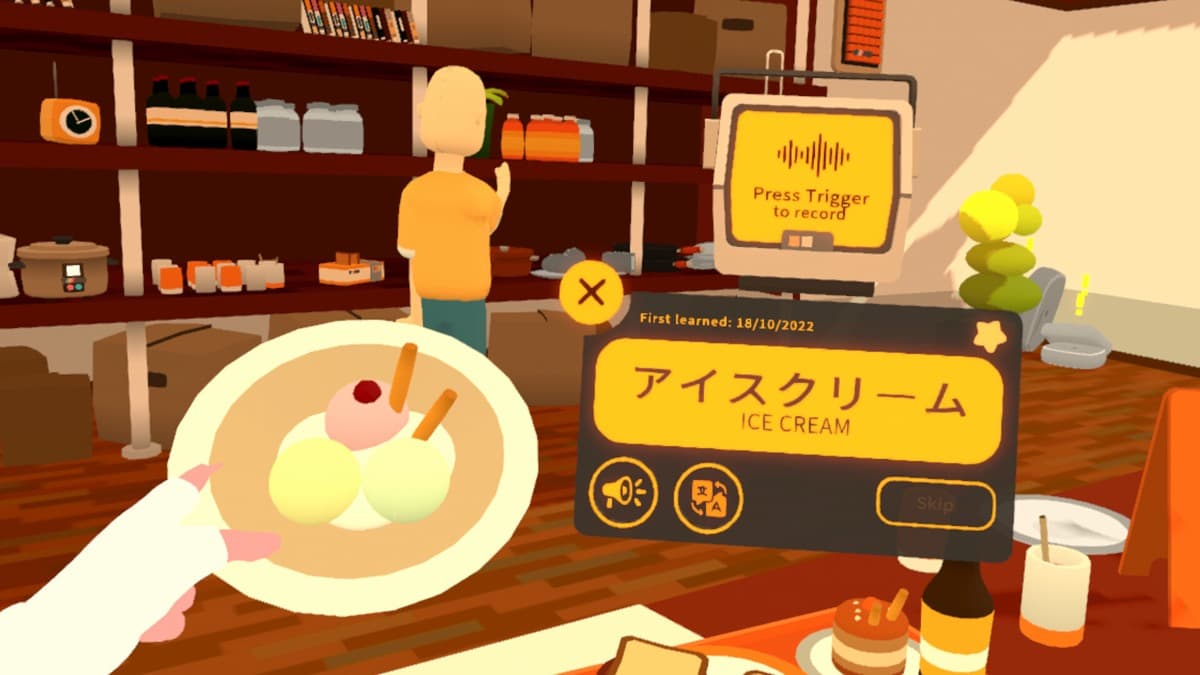
Explore a virtual world and practice pronouncing Japanese words using speech recognition. Good if you'd rather start with individual words before full conversations.
For other options where learning Japanese is the gameplay, check out our guide to the best games for learning Japanese.
5. Where to go next
You don't need to learn everything at once. Here's the speaking-first path from this article, and where each step goes deeper in the series:
- Get a head start with English loanwordsNext in the series: English words in Japanese
- Get the sounds rightNext in the series: Japanese pronunciation for speaking
- Use conversation cheat codes with sentence frames and reactionsNext in the series: Japanese sentence structure for speaking · Common Japanese words & phrases for conversations
- Speak a little every day
We'll leave you with this simple 15-minute routine you can do daily to improve your spoken Japanese:
| Time | What to do |
|---|---|
| 5 min | Say words & sentences out loud while clapping your hands to practice mora rhythm and tongue twisters |
| 5 min | Learn new sentence frames & words together every day, and then speak them out loud. |
| 5 min | Practice your conversation-ready sentences with a human or AI tutor |
And once you're more confident, try your sentences with a Japanese speaker. Chances are, they’ll listen and let out a surprising へえ! (hē!) at how good you are.
Ready to say your first sentence out loud?
Learn more about Gaijin Mode and start speaking todayFrequently Asked Questions
Can you learn to speak a language without learning to read?
Yes. If children can speak before they can read, then so can you!
Do you need hiragana or kanji before speaking?
If your priority is speaking, you can safely put them on hold. You can complete all skills in this guide using Romaji, audio, and daily practice. Once you feel comfortable speaking and realize "Being able to read menus would be convenient," begin learning Hiragana and Katakana. Kanji can wait until much later.
How do you practice speaking Japanese alone?
Use AI, try shadowing, record yourself, or talk to yourself. Say one pattern out loud ten times, practice a reaction or new sentence frame learnt with your AI tutor on Gaijin Mode.
Should beginners learn polite or casual Japanese first?
Polite Japanese, or 丁寧語 (teineigo). The sentence patterns in this article already use the standard polite form, です (desu) and ください (kudasai). You can use it with everyone, so it will help you a lot. You can learn casual Japanese later, when you make Japanese friends.
How long does it take to speak conversational Japanese?
We recommend 10 to 15 focused minutes every day, which is far better than a 2-hour marathon on Sunday. Muscle memory thrives on daily repetition.